


Introduction
In the competitive world of foodservice, standing out with mouthwatering, evenly cooked meats can be a game-changer for your restaurant, hotel, or bakery. A commercial rotisserie oven isn’t just a piece of equipment—it’s a revenue driver, a flavor enhancer, and a testament to your commitment to quality. Whether you’re serving crispy rotisserie chicken, succulent lamb, or tender pork, the right rotisserie oven transforms ordinary dishes into signature offerings.
But with so many options—from countertop electric models to heavy-duty floor-standing units—how do you choose the best commercial rotisserie oven for your business? This guide, crafted by Biengastro (a 20+ year expert in commercial kitchen equipment), will walk you through everything you need to know: types, key features, capacity, maintenance, and how to match your needs to the perfect model.
Section 1: What Is a Commercial Rotisserie Oven and Why Your Restaurant Needs One
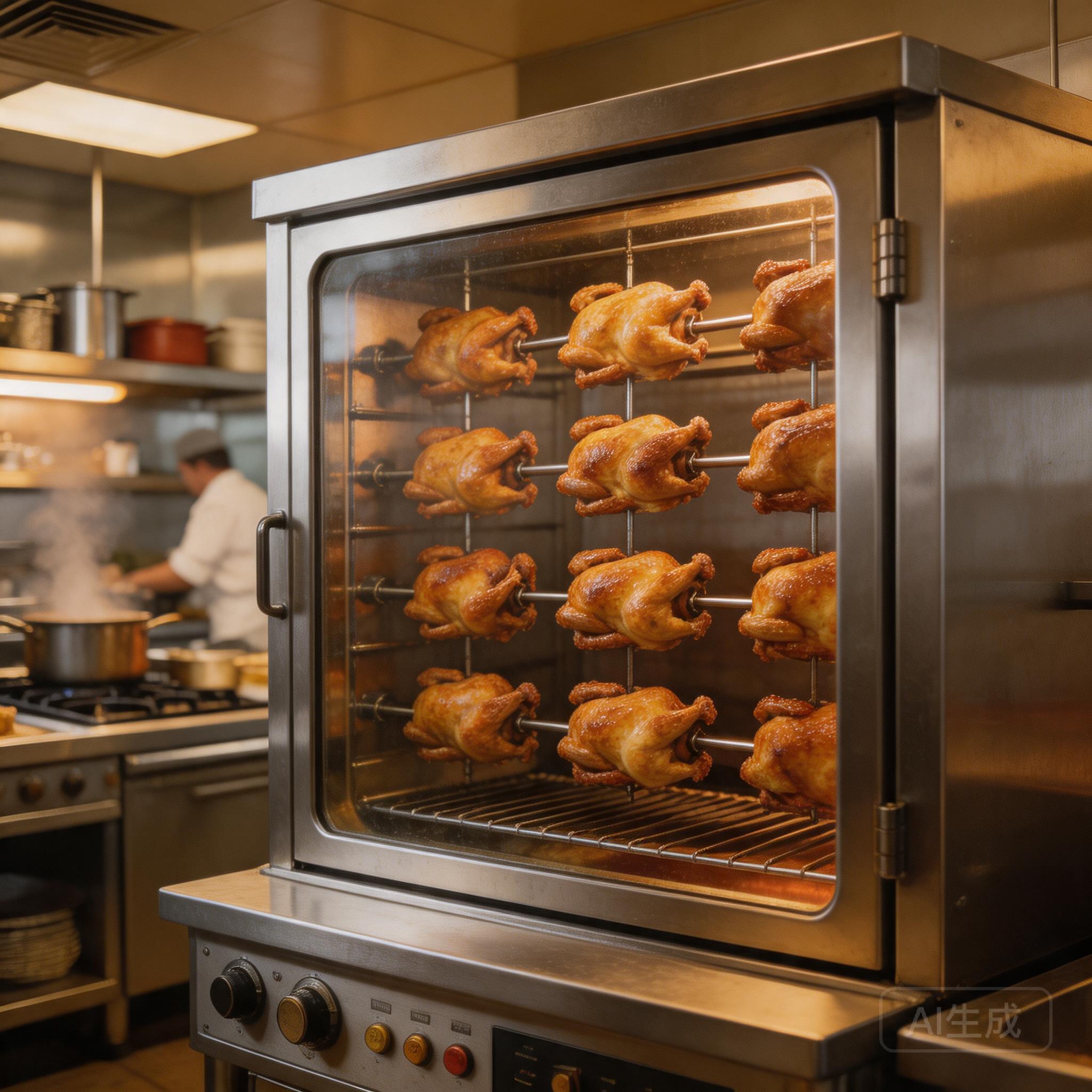
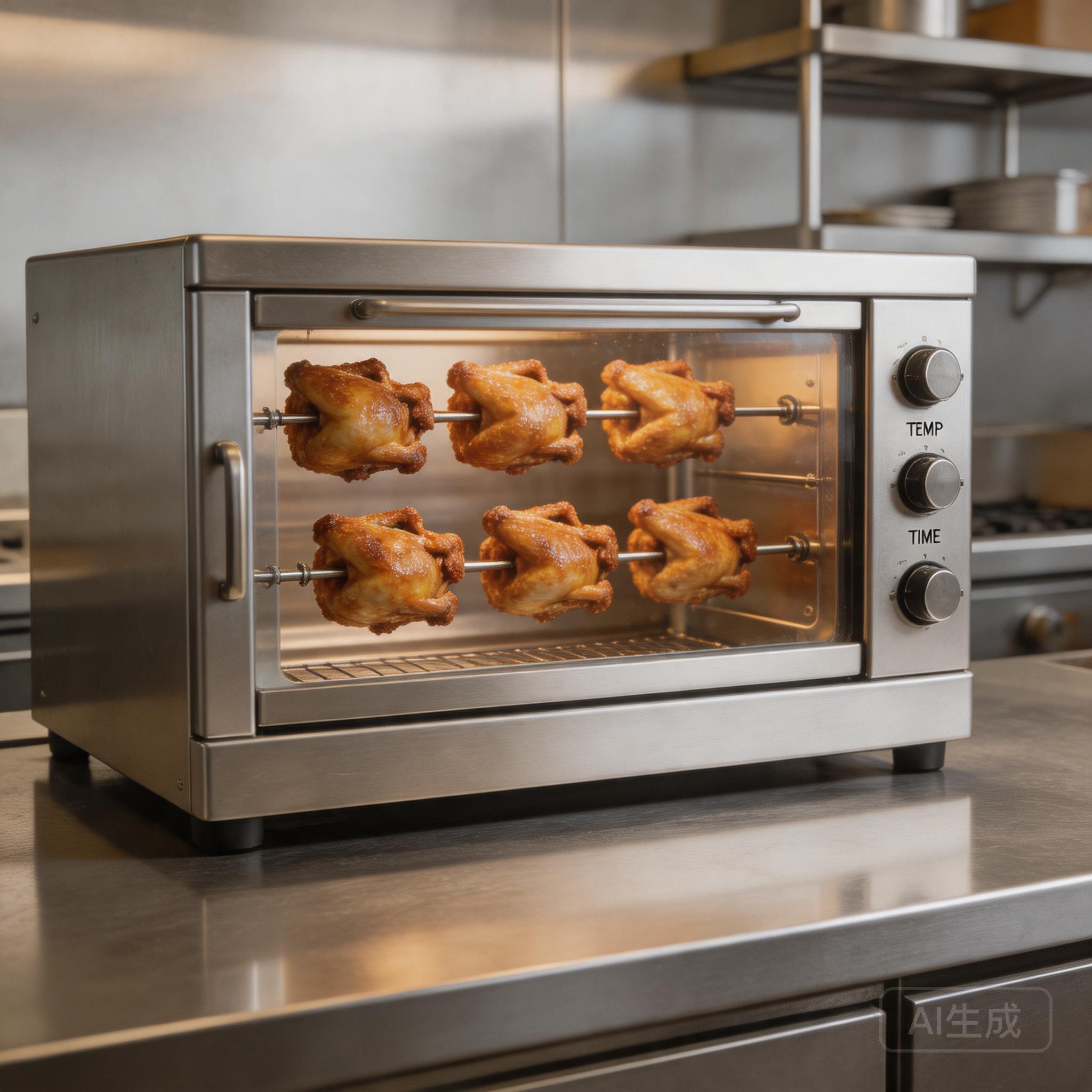
A commercial rotisserie oven uses rotating skewers to cook meat evenly, basting it in its own juices for unmatched flavor and texture. Unlike traditional ovens, rotisseries ensure consistent heat distribution, resulting in crispy exteriors and tender interiors—ideal for dishes that demand visual appeal and taste.
Why Your Business Needs a Rotisserie Oven:
- Efficiency & Speed: Rotisseries cook multiple pieces simultaneously (e.g., 4–16 skewers), reducing wait times during peak hours.
- Flavor & Presentation: Rotating meats self-baste, creating a caramelized crust and juicy interior—perfect for menu items that stand out (e.g., rotisserie chicken, duck, or spiced pork).
- Menu Versatility: Expand your offerings with rotisserie-style dishes, attracting new customers and encouraging repeat business.
- Space Optimization: Compact countertop models (like Biengastro’s electric rotisserie ovens) fit small kitchens, while floor-standing units handle high-volume needs.
Biengastro’s commercial rotisserie ovens, built with food-grade stainless steel 304 and CE/RoHS/LFGB certifications, ensure durability, safety, and compliance—critical for busy foodservice environments.
Section 2: Types of Commercial Rotisserie Ovens
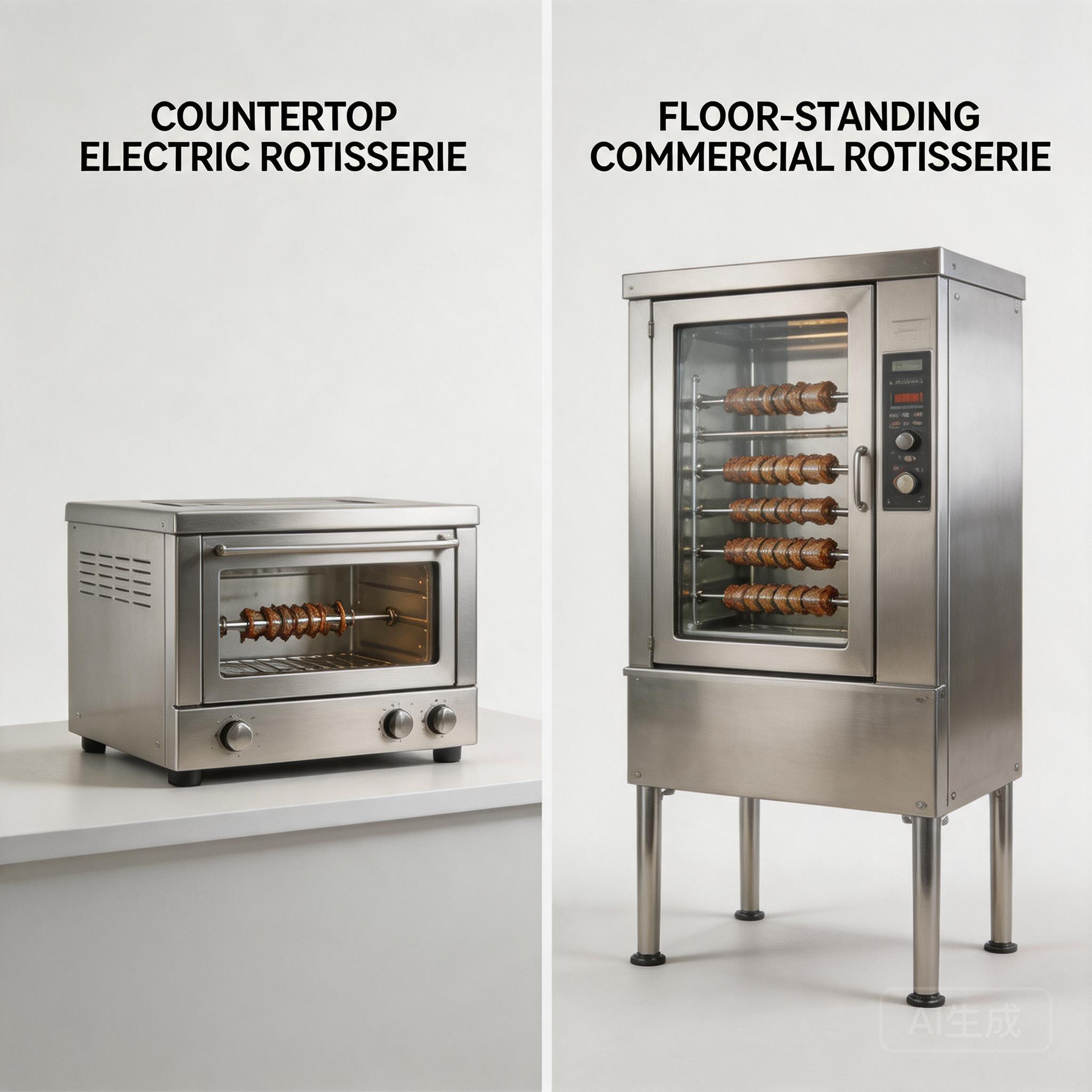
Choosing the right type depends on your kitchen layout, volume, and fuel preferences. Let’s break down the main categories:
1. Electric Rotisserie Ovens
- Countertop Electric: Perfect for small restaurants, cafes, or delis. Biengastro’s countertop models (1500W–3500W) offer adjustable temperature (50–300°C) and 4–8 skewer capacity, ideal for moderate volumes.
- Floor-Standing Electric: Designed for high-volume operations (e.g., supermarkets, large hotels). These units (up to 16 skewers) feature robust stainless steel construction and precise temperature control.
2. Gas Rotisserie Ovens (Note: Biengastro specializes in electric, but gas is a common alternative)
- Best for kitchens with gas lines, offering rapid heat and lower operating costs for very high-volume use. However, electric models (like Biengastro’s) are easier to install, safer, and more energy-efficient for most businesses.
3. Specialty Rotisserie Grills (Rotisserie Grill Machines)
- Combine rotisserie cooking with grilling for charred, smoky flavors. Ideal for BBQ joints or steakhouses looking to diversify their menu with rotisserie-grilled meats.
Section 3: Key Features to Look for When Buying a Commercial Rotisserie Oven
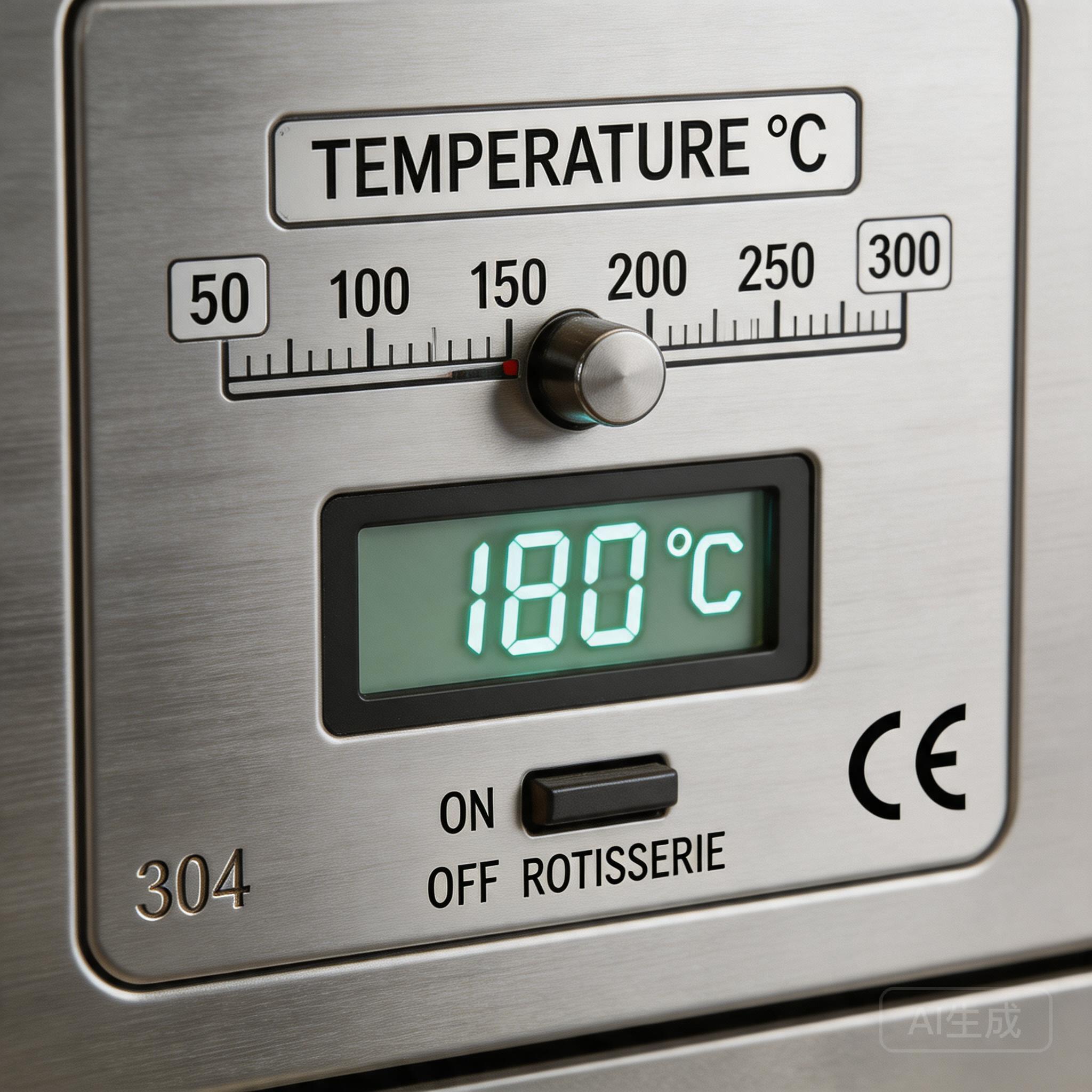
Not all rotisserie ovens are created equal. Prioritize these features to ensure reliability, safety, and performance:
1. Construction & Durability
- Stainless Steel 304 Body: Resists corrosion, heat, and wear—critical for commercial kitchens. Biengastro’s ovens use food-grade 304 stainless steel, ensuring longevity and easy cleaning.
2. Temperature Control
- Adjustable 50–300°C Range: Precision control lets you cook different meats (e.g., chicken at 180°C, lamb at 220°C) to perfection. Biengastro’s models offer digital or analog controls for accuracy.
3. Skewer Capacity
- 4–16 Skewers: Match capacity to your peak demand. A small café might need 4 skewers, while a busy supermarket rotisserie requires 12–16.
4. Certifications
- CE, RoHS, LFGB: These certifications ensure safety, environmental compliance, and food contact safety—non-negotiable for commercial use. Biengastro’s ovens meet all three, giving you peace of mind.
5. Safety Features
- Auto-Shutoff, Heat-Resistant Handles, & Cool-Touch Exteriors: Prevent accidents in busy kitchens.
6. Power & Efficiency
- 1500W–3500W (Electric): Sufficient for rapid heating and consistent cooking. Biengastro’s electric models balance power and energy efficiency.
Section 4: Rotisserie Oven Capacity Guide
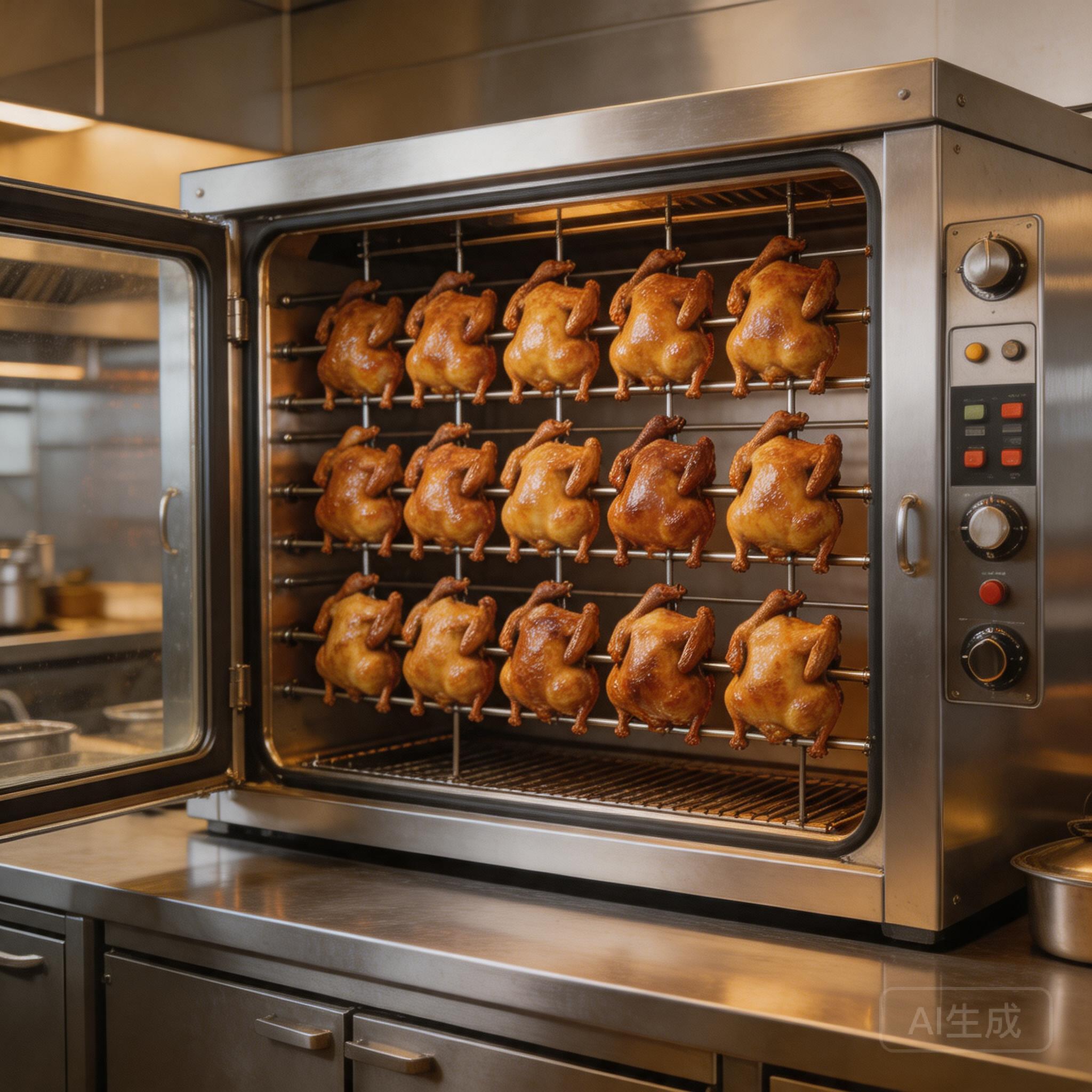
Choosing the right capacity ensures you meet demand without overspending on unused space. Use this guide to determine your needs:
1. Small-Scale Operations (Cafes, Delis, Food Trucks)
- 4–6 Skewers: Biengastro’s countertop electric rotisserie ovens (e.g., 4-skewer models) handle 20–50 meals daily, perfect for limited menus or low-volume service.
2. Medium-Scale (Restaurants, Bakeries, Hotels)
- 8–12 Skewers: Ideal for 50–150 daily meals. A 10-skewer model (like Biengastro’s mid-range units) can cook 10 chickens or 5 large cuts of meat at once.
3. High-Volume (Supermarkets, Large Caterers)
- 12–16 Skewers: Designed for 150+ meals daily. Biengastro’s floor-standing rotisserie ovens (16-skewer capacity) ensure you never run out of popular items.
Pro Tip:
Calculate your peak-hour demand (e.g., 30 chicken orders per hour) and choose a capacity that exceeds this by 20% to account for prep time and variations.
Section 5: Top Tips for Operating and Maintaining Your Commercial Rotisserie Oven
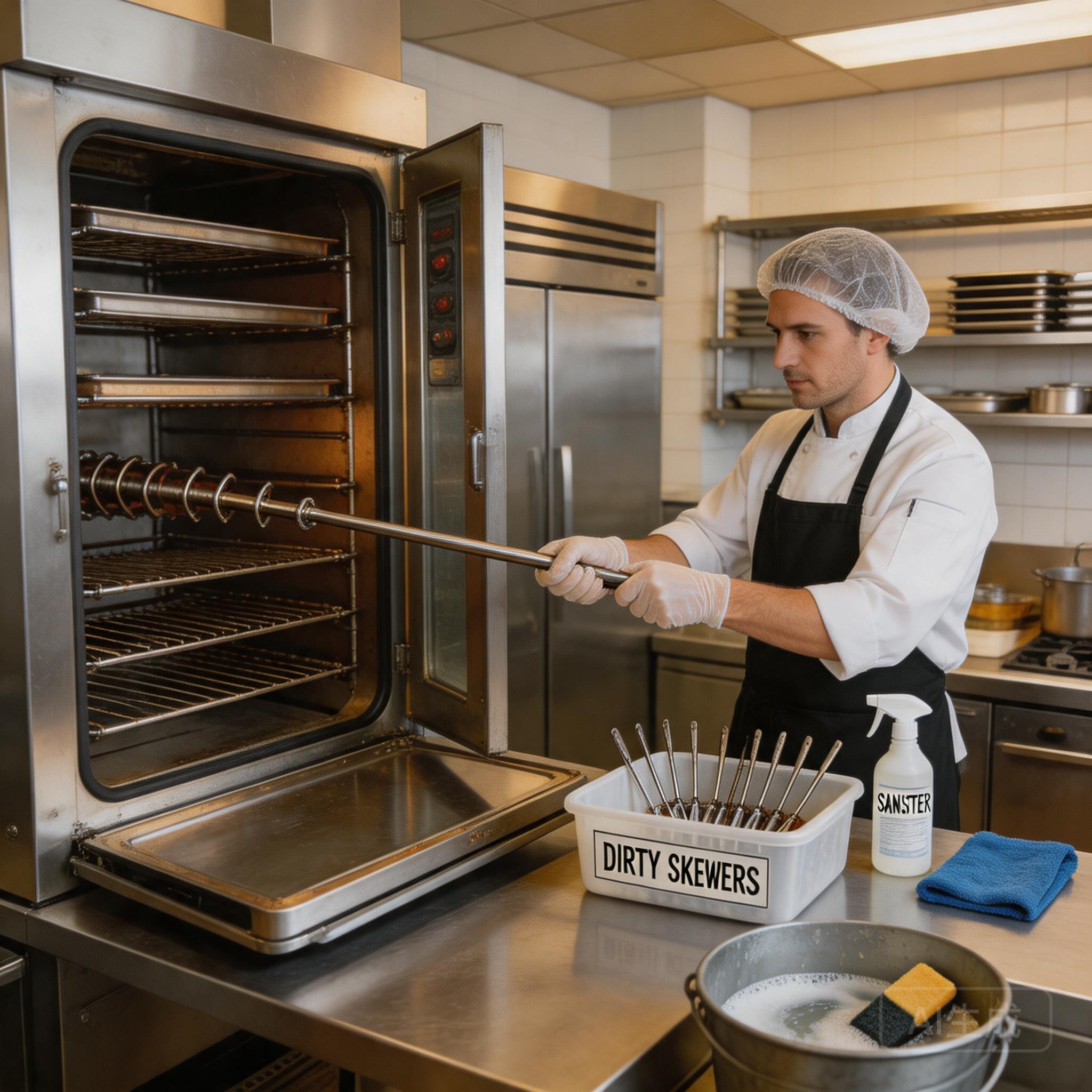
Proper operation and maintenance extend your oven’s life and ensure food safety. Follow these tips:
1. Daily Cleaning
- Wipe the interior with a damp cloth after cooling. Remove skewers and wash them with food-safe detergent.
- For stubborn grease, use a mild degreaser (avoid abrasive cleaners that damage stainless steel).
2. Weekly Maintenance
- Inspect heating elements and wiring for damage.
- Lubricate skewer motors (if applicable) to ensure smooth rotation.
- Check temperature accuracy with a probe thermometer (adjust as needed).
3. Safety & Efficiency
- Never overload skewers (follow manufacturer limits—Biengastro’s ovens list max weight per skewer).
- Keep ventilation clear to prevent overheating.
- Train staff on proper use (e.g., avoiding contact with hot surfaces).
4. Long-Term Care
- Schedule annual professional servicing (especially for gas models, though Biengastro’s electric ovens require minimal maintenance).
- Replace worn parts (e.g., skewer rods, heating elements) promptly to avoid breakdowns.
Section 6: How to Choose the Right Rotisserie Oven for Your Business (Buying Recommendation)
After assessing your needs (type, capacity, features), it’s time to choose a model that aligns with your goals. Biengastro’s commercial rotisserie ovens, built with 20+ years of industry expertise, offer:
1. Countertop Electric Rotisserie Ovens
- Ideal for: Small kitchens, limited space.
- Specs: 4–8 skewers, 1500W–2500W, 50–300°C adjustable temp, stainless steel 304 body, CE/RoHS/LFGB certified.
- Link: Shop Biengastro Countertop Rotisserie Ovens
2. Floor-Standing Electric Rotisserie Ovens
- Ideal for: High-volume operations, supermarkets, large restaurants.
- Specs: 12–16 skewers, 3000W–3500W, digital temperature control, heavy-duty stainless steel, CE certified.
- Link: Shop Biengastro Floor-Standing Rotisserie Ovens
Why Biengastro?
- 20+ Years of Expertise: We understand foodservice needs, crafting ovens that balance performance, safety, and durability.
- Customization: Need a specific skewer count or feature? Our team works with you to design solutions.
- Support: From installation guidance to after-sales service, we’re here to ensure your success.
FAQ: Commercial Rotisserie Oven Questions
H3: What’s the difference between electric and gas rotisserie ovens?
Electric models (like Biengastro’s) are easier to install (no gas lines), safer, and more energy-efficient for most volumes. Gas ovens offer faster heat and lower operating costs for very high-volume use, but require professional installation.
H3: How long does a commercial rotisserie oven last?
With proper maintenance, a Biengastro rotisserie oven (stainless steel 304 construction) lasts 5–10 years. Regular cleaning and servicing extend its lifespan.
H3: Can I use a commercial rotisserie oven for other meats besides chicken?
Absolutely! Biengastro’s ovens cook duck, lamb, pork, and even vegetables (e.g., roasted peppers) with equal precision. Adjust temperature and skewer spacing for different ingredients.
H3: Do Biengastro rotisserie ovens come with warranties?
Yes—our commercial rotisserie ovens include a 1–2 year warranty (varies by model) and lifetime technical support. Contact our team for details.
H3: How much space do I need for a countertop rotisserie oven?
Most countertop models (like Biengastro’s) require 24–36 inches of clearance (width x depth) and 12 inches of vertical space for ventilation. Check product specs for exact dimensions.
Related Articles
- Commercial Convection Oven Buying Guide: Choose the Best for Your Kitchen
- Best Commercial Fryers for Restaurants: Efficiency, Capacity, and Safety
- How to Choose a Commercial Refrigerator for Your Restaurant
Conclusion
Investing in the right commercial rotisserie oven transforms your menu, boosts efficiency, and sets your business apart. By prioritizing capacity, features (like stainless steel 304 construction and adjustable temperature), and maintenance, you ensure long-term success.
Biengastro’s 20+ years of expertise in commercial kitchen equipment means our rotisserie ovens are built to perform—whether you need a compact countertop model or a heavy-duty floor-standing unit. Explore our range at biengastro.com/shop/ or contact our team at contact-us to discuss your needs.
Ready to serve mouthwatering rotisserie dishes? Your perfect oven is just a click away!