


Commercial Contact Grill Buying Guide: How to Choose the Best Electric Contact Grill for Your Restaurant
Introduction to Commercial Contact Grills
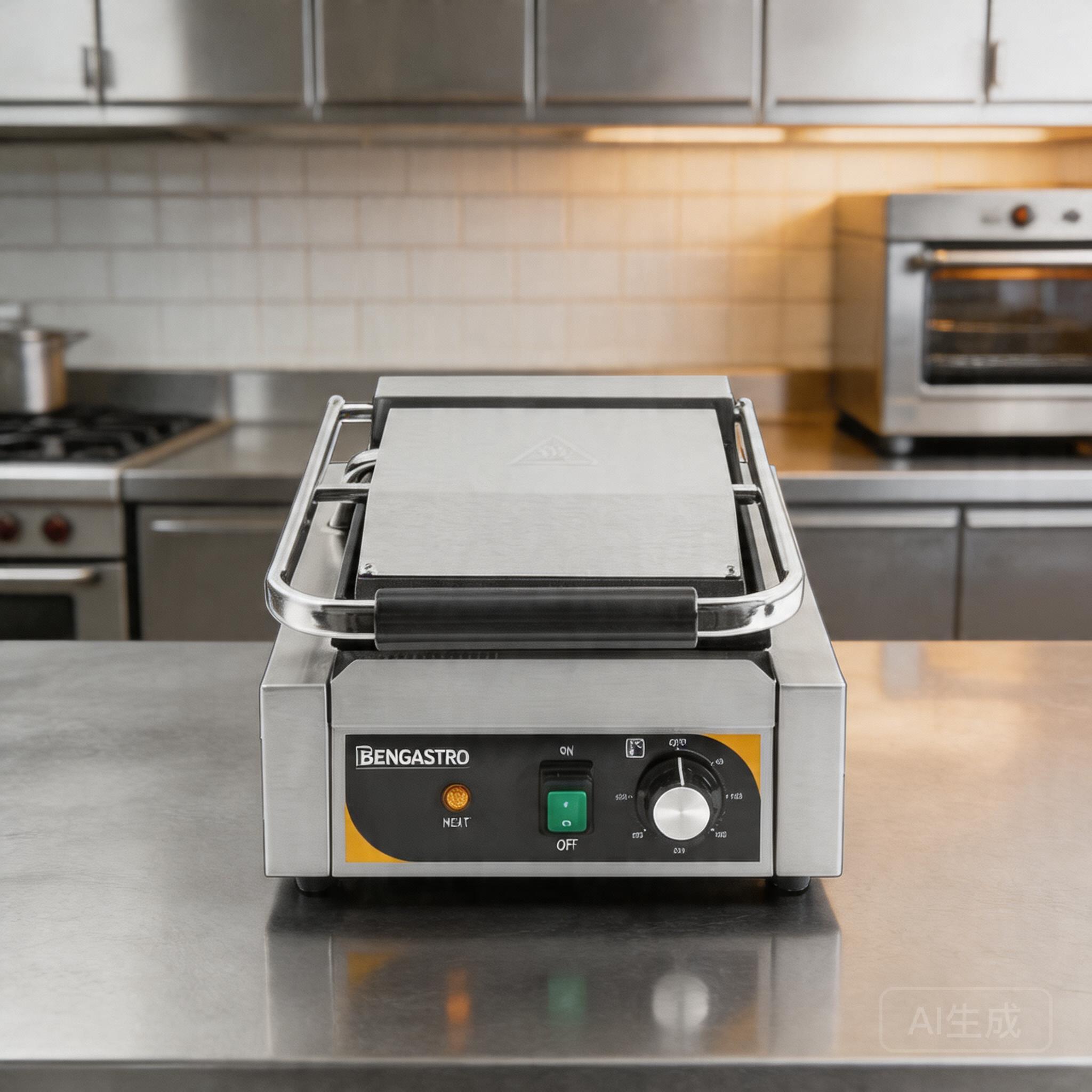
In a bustling restaurant kitchen, speed, consistency, and quality are non-negotiable. A commercial contact grill (also known as a panini grill or electric griddle) is a workhorse that delivers perfectly seared sandwiches, juicy steaks, crispy vegetables, and more—all while saving time and energy. Whether you’re running a café, diner, or fine-dining establishment, choosing the right electric contact grill can transform your menu and kitchen efficiency.
With over 20 years of expertise in commercial kitchen equipment, Biengastro understands the unique demands of foodservice professionals. Our range of electric contact grills combines robust construction, precise temperature control, and user-friendly design—backed by CE/UL certifications and premium materials like cast iron and stainless steel. In this guide, we’ll walk you through everything you need to know to select the ideal commercial contact grill for your restaurant.
Benefits of a Commercial Contact Grill
Why should your restaurant invest in a commercial contact grill? Let’s explore the key advantages:
- Speed & Efficiency: Contact grills cook food from both sides simultaneously, reducing cooking time by up to 50% compared to traditional grills. This means faster service during peak hours.
- Versatility: From panini sandwiches and burgers to grilled vegetables, steaks, and even quesadillas, a contact grill handles diverse menu items. Some models (like our grooved griddles) create attractive grill marks, while smooth plates excel at delicate items like fish or pancakes.
- Consistency: Precise temperature control ensures every dish is cooked evenly, eliminating hotspots. This consistency builds customer trust and reduces food waste.
- Space-Saving Design: Most commercial contact grills are countertop models, making them ideal for compact kitchens. Their vertical design maximizes workspace without sacrificing capacity.
- Energy Efficiency: Electric contact grills heat up quickly and maintain temperature efficiently, reducing energy costs over time.
Key Factors to Evaluate When Buying
To choose the best electric contact grill, focus on these critical features:
1. Power & Wattage
Commercial contact grills require sufficient power to heat up quickly and maintain temperature during heavy use. For smaller operations (e.g., cafes), a 2000–3000W model (like our BG320S with 3000W) works well. High-volume restaurants may need 6000W+ models (e.g., BG650S with 6000W) to handle continuous cooking.
2. Cooking Surface & Material
- Size: Measure your countertop space and estimate daily volume. A 12″ x 16″ surface is suitable for small cafes, while 20″ x 30″ or larger (like our BG650S) caters to high-output kitchens.
- Material: Cast iron (e.g., our BG320S series) retains heat evenly and develops a natural non-stick patina over time. Stainless steel (or chrome-plated, like BG320S-Cr) offers easy cleaning and corrosion resistance.
- Plate Type:
– Smooth Plates: Best for delicate foods (fish, eggs) or items that need even, flat contact (e.g., pressed tortillas). Our BG320S (smooth cast iron) is perfect for this.
– Grooved Plates: Create attractive grill marks and allow fat to drain, enhancing flavor and presentation. The BG320G (full-groove cast iron) is ideal for steaks, burgers, and marinated dishes.
3. Temperature Control
Look for grills with precise temperature ranges (200°F to 500°F is standard) and easy-to-use controls (dial, digital, or touchscreen). Consistent heat ensures food quality—for example, searing steaks at 450°F or toasting sandwiches at 350°F.
4. Durability & Safety
Commercial kitchens demand equipment that lasts. Biengastro’s contact grills feature heavy-duty frames, heat-resistant handles, and non-slip feet for stability. Safety features like auto-shutoff, cool-touch exteriors, and overheat protection (common in our CE-certified models) prevent accidents.
5. Ease of Cleaning
Removable, non-stick plates (or easy-to-wipe surfaces) simplify cleanup. Some models (like our chrome-plated griddles) have a smooth finish that resists food buildup, while others feature drip trays to collect grease, reducing mess.
Types of Commercial Contact Grills
Not all contact grills are created equal. Let’s break down the main categories:
Countertop Contact Grills
Perfect for small to medium kitchens, these compact models (like our BG320S series) sit on countertops, saving space. They’re ideal for cafes, delis, and food trucks, offering portability and easy installation.
Double-Sided (Clamshell) Contact Grills
These grills feature two heated plates (top and bottom) that close over the food, cooking it from both sides. This design is faster and more energy-efficient, making it ideal for high-volume orders (e.g., busy lunch rushes). Biengastro’s double-contact grills (like the BG650S with 6000W) deliver even heat distribution for consistent results.
Commercial Panini Grills
A type of contact grill optimized for sandwiches, panini grills often have grooved plates for grill marks and a hinged top plate to accommodate thick or uneven items (like stuffed sandwiches). They’re versatile enough to handle both light and heavy menu items.
Smooth vs. Grooved Plates
- Smooth Plates: Best for delicate foods (fish, eggs) or items that need even, flat contact (e.g., pressed tortillas). Our BG320S (smooth cast iron) is perfect for this.
- Grooved Plates: Create attractive grill marks and allow fat to drain, enhancing flavor and presentation. The BG320G (full-groove cast iron) is ideal for steaks, burgers, and marinated dishes.
Sizing Your Grill for Your Kitchen
Choosing the right size depends on:
- Kitchen Space: Measure your countertop or designated area. Countertop models like our BG320S (compact design) fit in tight spaces, while larger units (like BG650S) require more room.
- Menu Volume: If you serve 100+ sandwiches daily, a high-capacity grill (6000W, large surface) is essential. For smaller operations, a 3000W model (e.g., BG320S) suffices.
- Menu Variety: If your menu includes thick items (like 2-inch steaks) or irregularly shaped foods, opt for a grill with adjustable height (e.g., a hinged top plate) to prevent squishing.
Top Picks from Biengastro
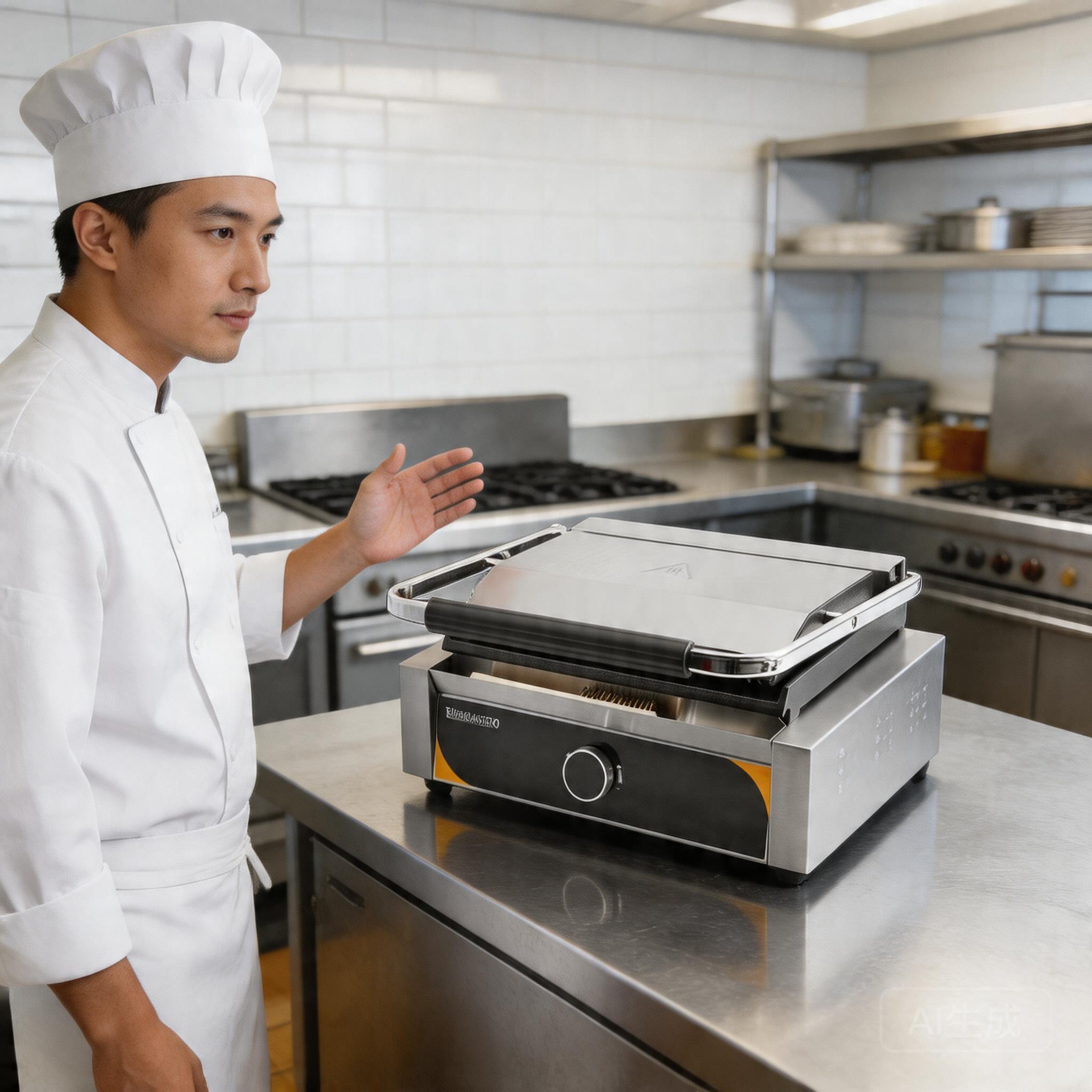
With decades of experience, Biengastro’s contact grills are engineered for durability, performance, and safety. Here are our top recommendations:
1. BG320S (Electric Griddle Smooth)
- Power: 3000W
- Voltage: 230V
- Material: Cast Iron (smooth surface)
- Use Case: Ideal for small cafes, diners, or food trucks. Perfect for pancakes, eggs, and delicate sandwiches. The smooth cast iron plate ensures even heat and easy cleaning.
2. BG320G (Electric Griddle Full Groove)
- Power: 3000W
- Voltage: 230V
- Material: Cast Iron (grooved surface)
- Use Case: Perfect for steaks, burgers, and grilled vegetables. The grooved plates create professional grill marks and drain excess fat, enhancing flavor.
3. BG650S (Electric Griddle Smooth, 6000W)
- Power: 6000W
- Voltage: 400V
- Material: Cast Iron (smooth surface)
- Use Case: Designed for high-volume kitchens (e.g., busy restaurants, hotels). The 6000W power ensures rapid heat recovery, even during peak hours.
Maintenance and Longevity
To keep your contact grill performing at its best:
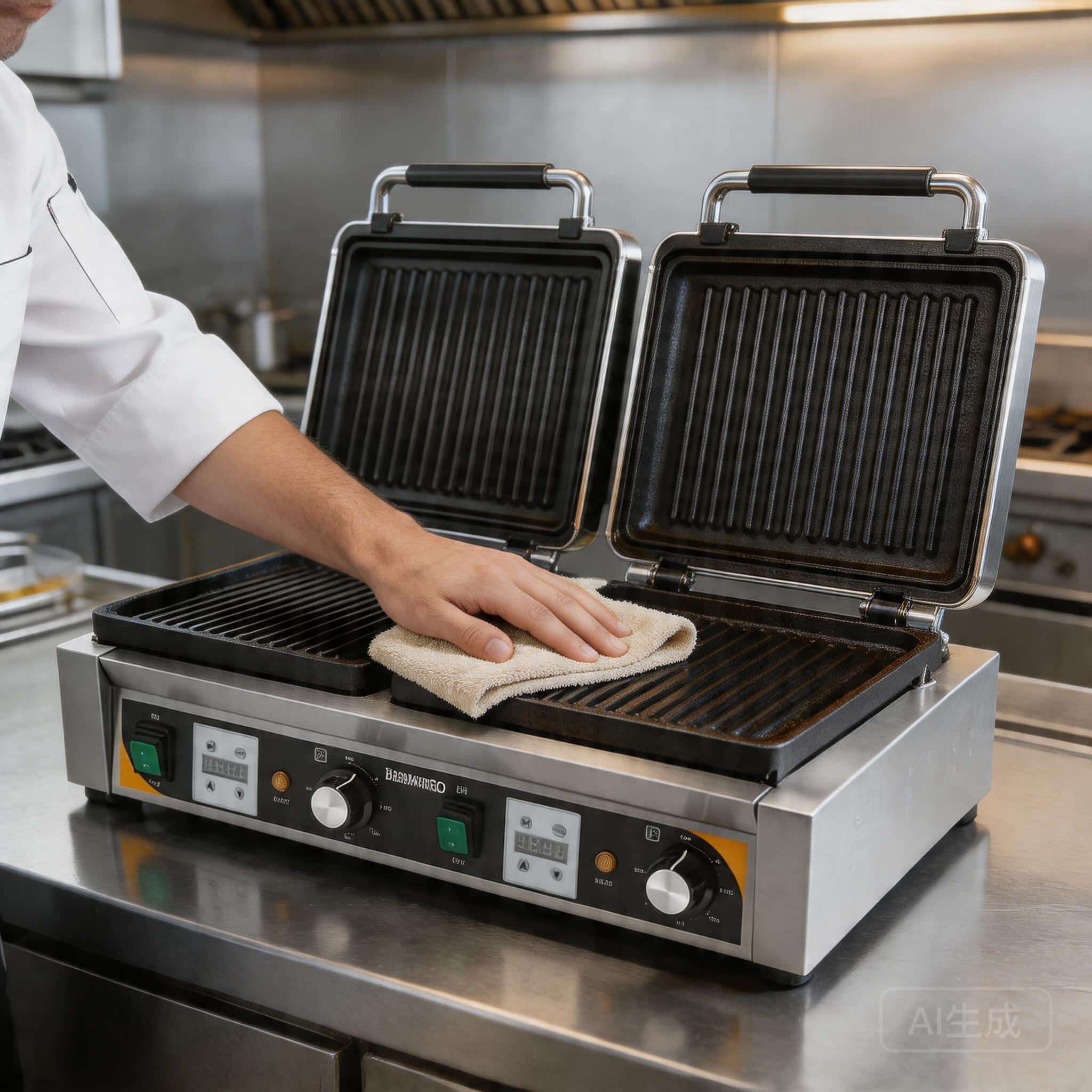
- Daily Cleaning: After use, turn off the grill and let it cool slightly. Wipe plates with a damp cloth or brush (avoid abrasive tools). For stubborn residue, use a non-stick-safe cleaner.
- Deep Cleaning: Weekly, remove plates (if removable) and soak in warm, soapy water. Scrub gently to remove buildup.
- Preventative Care: Season cast iron plates regularly (with food-grade oil) to maintain non-stick properties and prevent rust.
- Safety Checks: Inspect cords, plugs, and controls monthly for damage. Ensure the grill is placed on a stable, heat-resistant surface.
FAQ Section
Q: How much power do I need for a commercial contact grill?
For small operations (10–20 orders/hour), 2000–3000W (like BG320S) is sufficient. High-volume kitchens (30+ orders/hour) should opt for 6000W+ models (e.g., BG650S) to maintain heat during continuous use.
Q: Can a contact grill replace a traditional grill?
Yes! Contact grills offer faster cooking, better energy efficiency, and more consistent results—especially for sandwiches, steaks, and vegetables. They’re a versatile addition to any kitchen, complementing (or replacing) traditional grills.
Q: Are Biengastro’s contact grills easy to install?
Most of our countertop contact grills (like BG320S and BG320G) are plug-and-play, requiring only a standard 230V or 400V outlet. Larger models (e.g., BG650S) may need professional installation to ensure proper voltage and wiring.
Q: How long do commercial contact grills last?
With proper maintenance, Biengastro’s contact grills (built with cast iron and stainless steel) can last 5–10 years or more. Our CE/UL-certified models are engineered for durability in commercial environments.
Related Articles
Explore these guides to optimize your kitchen:
- Choosing the Right Commercial Oven for Your Bakery
- Electric vs. Gas Fryer: Which is Best for Your Restaurant?
- Essential Cooking Equipment for Commercial Kitchens
Conclusion
Investing in the right commercial contact grill is a game-changer for your restaurant’s efficiency, menu quality, and bottom line. By evaluating power, size, plate type, and durability (and leveraging Biengastro’s 20+ years of expertise), you’ll find a grill that meets your unique needs.
Ready to explore our range? Browse Biengastro’s commercial contact grills at our shop or contact our team at contact us for personalized recommendations. Let’s elevate your kitchen’s performance—one perfectly grilled dish at a time.