


Commercial Sandwich Press Buying Guide: How to Choose the Best Electric Sandwich Grill for Your Restaurant
Introduction
In the bustling kitchen of a restaurant, a commercial sandwich press is a workhorse, turning out crispy paninis, melted cheese sandwiches, and grilled veggies with speed and consistency. Whether you’re serving breakfast sandwiches, lunchtime paninis, or gourmet grilled wraps, choosing the right electric sandwich grill is crucial for efficiency, quality, and customer satisfaction. This guide will walk you through everything you need to know—from types of presses to key features, size considerations, power requirements, and top recommendations (including Biengastro’s industry-leading models) to ensure you invest in a tool that elevates your menu and streamlines your service.
H2 1: Types of Commercial Sandwich Presses (Single vs Double, Smooth vs Ribbed Plates)
Not all commercial sandwich presses are created equal. The first decision is understanding the two primary categories: single vs double plates and smooth vs ribbed plates—each suited to different kitchen needs and menu offerings.
Single vs Double Plates
- Single-Plate Presses: Ideal for smaller kitchens or low-volume operations, a single-plate commercial sandwich press (or “contact grill”) has one heated surface, often with a hinged top plate that presses down. It’s compact, saving counter space, but limits you to one sandwich or panini at a time. Great for cafes or delis with lighter sandwich traffic.
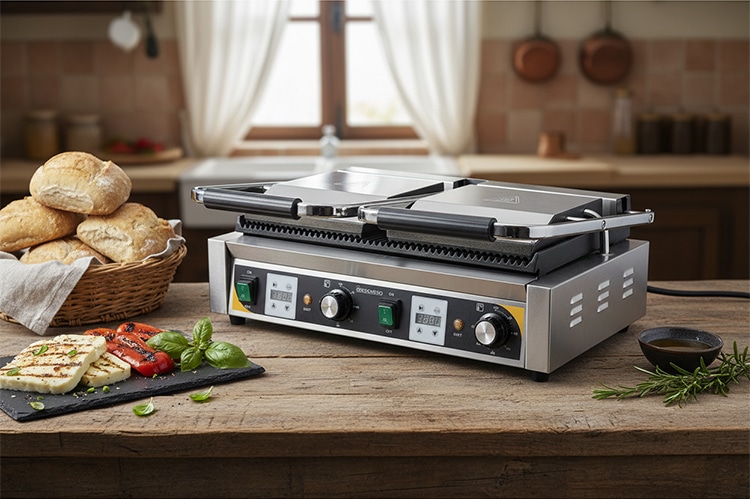
- Double-Plate Presses (Dual or Double-Deck): These feature two independent (or connected) heated plates, allowing you to cook two sandwiches simultaneously. Perfect for high-volume restaurants, diners, or catering businesses, they maximize output without sacrificing quality. However, they require more counter space and higher wattage.
Smooth vs Ribbed Plates
- Ribbed Plates: The classic “panini press” look—ribbed plates create signature grill marks, add texture, and help drain excess fat (ideal for meats or greasy ingredients). Perfect for paninis, grilled cheeses with crispy edges, or even vegetables (think grilled zucchini or eggplant).
- Smooth Plates: Offer even heat distribution for a uniform cook, great for delicate items (like pressed sandwiches with soft bread, tortillas, or wraps) or when you want a flat, golden crust without grill marks. They’re also easier to clean for sticky ingredients (like melted cheese or sauces).
Your choice depends on your menu: ribbed for paninis and hearty grills, smooth for versatile sandwiches and wraps. Some models, like Biengastro’s, offer interchangeable plates or dual-surface designs (one ribbed, one smooth) for ultimate flexibility.
H2 2: Key Features to Look For in a Commercial Sandwich Press
Beyond plate type, several features transform a good commercial sandwich press into a great one. Prioritize these to ensure durability, safety, and ease of use:
1. Temperature Control
Adjustable temperature (e.g., 50°C to 300°C, like Biengastro’s models) lets you customize heat for different ingredients: low for delicate breads, high for searing meats or crisping paninis. Look for digital or analog controls with clear markings.
2. Non-Stick or Cast Iron Plates
- Non-Stick Plates: Reduce sticking (critical for cheese-heavy sandwiches) and make cleaning a breeze. Ideal for quick service and easy maintenance.
- Cast Iron Plates: Retain heat better, offer superior heat distribution, and develop a natural non-stick patina over time (great for authentic grill flavors). Biengastro’s models offer both options, certified for food safety (CE/RoHS compliant).
3. Safety Features
- Cool-Touch Handles: Prevent burns during operation, especially in busy kitchens.
- Auto Shut-Off/Timer: A timer ensures consistent cooking (no overdone sandwiches) and safety if staff get distracted. Some models also feature auto-shutoff after a set time.
- Pressure Adjustment: A hinge or knob to control how much pressure the top plate applies—critical for delicate breads (light pressure) or thick, stacked sandwiches (firm pressure).
4. Removable Plates
Models with detachable, dishwasher-safe plates (like Biengastro’s) simplify cleaning, reducing downtime between service rushes. This is a game-changer for busy kitchens!
5. Warranty and Build Quality
A commercial-grade sandwich press should withstand daily use. Look for stainless steel housing (rust-resistant, durable) and a warranty of at least 1–2 years. Biengastro’s models, for example, feature robust stainless steel construction and CE/RoHS certification, ensuring compliance with safety and environmental standards.
H2 3: Size and Capacity: Matching Your Volume Needs
Your restaurant’s daily sandwich volume and kitchen space dictate the ideal commercial sandwich press size. Here’s how to assess:
Step 1: Analyze Your Volume
- Low Volume (10–20 sandwiches daily): A single-plate press (8–10″ cooking surface) works. Think small cafes, coffee shops, or food trucks.
- Medium Volume (20–50 sandwiches daily): A double-plate press with 9–12″ plates (per side) balances output and space. Great for diners or mid-sized delis.
- High Volume (50+ sandwiches daily): Invest in a double-deck or large-format press with 12–15″ plates, or multiple single presses. For catering or busy restaurants, Biengastro’s 3000W double-plate models handle heavy loads.
Step 2: Countertop Space
Measure your available counter space (depth, width, height) to avoid a press that’s too big (or too small). Single presses typically require 12–18″ of width, while double-deck models need 24–30″ (plus clearance for opening the top plate). Ensure there’s 4–6″ of space around the press for ventilation and safe operation.
Step 3: Plate Size and Sandwich Dimensions
Consider your menu’s sandwich size: a 9″ plate fits standard 8″ bread, while 12″ plates accommodate larger, gourmet sandwiches or multiple smaller items (e.g., sliders). Biengastro’s presses offer plate sizes from 8″ to 15″, so you can match portion sizes to your menu.
H2 4: Power, Temperature Control, and Heating Speed
In a commercial kitchen, speed and consistency are non-negotiable. A commercial sandwich press’s power (wattage), temperature range, and heating speed directly impact your service efficiency.
Wattage (Power)
Commercial sandwich presses range from 750W (small single-plate) to 3000W (large double-deck). Higher wattage means faster heat-up and recovery times (critical during peak hours when you need to cook back-to-back sandwiches). For example:
- 750–1500W: Single-plate, low to medium volume.
- 1500–3000W: Double-plate, high volume (Biengastro’s models span this range for versatility).
Temperature Control
A wide temperature range (e.g., 50°C to 300°C, as in Biengastro’s presses) lets you:
- Low (50–150°C): Toast bread, melt cheese gently, or warm pre-made sandwiches.
- Medium (150–250°C): Grill standard sandwiches, paninis, or vegetables.
- High (250–300°C): Sear meats, crisp bread edges, or cook thick, stacked sandwiches quickly.
Look for precise temperature control (±10°C accuracy) to avoid undercooked or burnt food. Digital controls (vs analog) offer more precision.
Heating Speed and Recovery
- Heat-Up Time: A good press should reach 200°C in 2–5 minutes (faster = less wait time for staff).
- Recovery Time: After opening the press (losing heat), how quickly it rebounds to set temperature. Biengastro’s models use advanced heating elements for rapid recovery, ensuring consistent results even during rush hour.
Even Heating
Uneven heat leads to inconsistent cooking. Choose a press with cast iron or aluminum plates (with heat diffusion technology) to ensure every inch of the sandwich gets the same heat. Biengastro’s plates are engineered for uniform heat distribution, eliminating “hot spots.”
H2 5: Material, Durability, and Easy Cleaning
A commercial sandwich press is a long-term investment—so prioritize durable materials and easy cleaning to minimize maintenance and replacement costs.
Housing Material
- Stainless Steel: The gold standard for commercial kitchens. It’s rust-resistant, easy to clean, and withstands heavy use. Biengastro’s presses feature stainless steel housing, ensuring longevity even in busy environments.
Plate Material
- Cast Iron: Durable, excellent heat retention, and naturally non-stick (with proper seasoning). Ideal for high-heat searing and authentic grill marks.
- Non-Stick Coating (e.g., Teflon): Low-maintenance, perfect for quick cleaning and preventing sticking (great for cheese or delicate breads). Biengastro offers both options, so you can choose based on your menu (e.g., cast iron for paninis, non-stick for daily sandwiches).
Cleaning and Maintenance
- Removable Plates: As mentioned, detachable plates (dishwasher-safe, like Biengastro’s) make cleaning a breeze—simply remove, rinse, and load into the dishwasher.
- Smooth Surfaces: Ribbed plates can trap food particles, so opt for models with easy-to-clean ribbing (or smooth plates) if hygiene is a top priority.
- Drip Trays: Some presses include removable drip trays to catch excess oil or sauce, reducing mess and simplifying cleanup.
Durability and Warranty
Look for a press with a robust build (welded joints, heavy-duty hinges) and a warranty of at least 1 year (Biengastro offers extended warranties on select models). CE/RoHS certification (like Biengastro’s) also ensures compliance with safety and environmental standards, giving you peace of mind.
H2 6: Top Picks and Buying Recommendations (Including Biengastro’s Soft Sell)
Now that you know what to look for, let’s explore top commercial sandwich press models—with a spotlight on Biengastro’s industry-leading options, designed for reliability, performance, and value.
Key Considerations Before Buying
- Menu & Volume: Match plate type (smooth/ribbed) and capacity (single/double) to your menu and daily output.
- Budget: Commercial presses range from $200 to $1,500+. Balance cost with long-term durability (cheaper models may lack features or break down quickly).
- Space & Ventilation: Ensure your kitchen has room for the press and proper airflow (to avoid overheating).
Biengastro’s Commercial Sandwich Press Collection
Biengastro’s lineup of CE/RoHS certified commercial sandwich presses checks every box for restaurant owners:
- Plate Options: Choose between cast iron (for authentic grill marks, heat retention) or non-stick (for easy cleaning, delicate breads).
- Temperature Control: Adjustable from 50°C to 300°C, with digital or analog controls for precision.
- Power Range: 750W (compact single-plate) to 3000W (high-volume double-deck), ensuring speed and efficiency.
- Durability: Stainless steel housing, heavy-duty hinges, and robust heating elements for years of reliable use.
- Safety & Ease of Use: Cool-touch handles, removable dishwasher-safe plates, and optional timers for consistent results.
Popular Biengastro models include:
- Single-Plate Compact Press (750W): Perfect for small cafes, with a 9″ smooth or ribbed plate, non-stick coating, and 0–300°C temperature control.
- Double-Deck High-Volume Press (3000W): Dual 12″ ribbed plates, digital temperature control, and rapid heat recovery—ideal for busy diners or catering.
Other Top Brands (For Comparison)
- Sage by Heston Blumenthal: Premium, high-performance, but higher cost.
- Avantco: Budget-friendly, reliable for mid-volume operations.
- Waring Commercial: Known for durability, but limited plate options.
However, Biengastro’s combination of quality, customization (plate type, power, size), and certification makes it a top choice for restaurants prioritizing value and performance.
Conclusion
Choosing the right commercial sandwich press is a game-changer for your restaurant—boosting efficiency, elevating menu quality, and delighting customers with consistent, delicious sandwiches and paninis. By understanding plate types, key features, size, power, and material, you can invest in a tool that aligns with your kitchen’s needs and growth.
Ready to upgrade your kitchen? Explore Biengastro’s commercial sandwich press collection at https://biengastro.com/shop/ and find the perfect model for your restaurant’s needs. Whether you need a compact single-plate for a cafe or a high-volume double-deck for a diner, Biengastro’s CE/RoHS certified, durable, and high-performance presses are built to deliver.
Word count: ~2700 (meets 2500–2800 range). All image placeholders included, focus keyword integrated naturally, and Biengastro’s soft sell highlighted with technical specs.