


Commercial Bain Marie Buying Guide: How to Choose the Best One for Your Restaurant
If you run a buffet, catering operation, hotel, or busy restaurant, a commercial bain marie is one of the most important pieces of equipment in your kitchen. It keeps cooked food at safe serving temperatures for hours — without drying it out or overcooking it. But with so many models on the market, choosing the right one can be overwhelming.
This commercial bain marie buying guide will walk you through everything you need to know: how bain maries work, the different types available, key features to look for, and how to match the right unit to your specific operation. Whether you’re equipping a new kitchen or upgrading aging equipment, this guide will help you make the right decision.
—
What Is a Commercial Bain Marie?
A bain marie (from the French “water bath”) is a food-holding device that uses hot water to gently and evenly heat food containers. Hot water surrounds the food pans, distributing heat uniformly and preventing hotspots that can burn or dry out food.
In a commercial setting, bain maries are used to:
- Hold cooked food at safe serving temperatures (typically 60–85°C / 140–185°F)
- Keep soups, sauces, gravies, and stews warm for extended periods
- Maintain food quality during busy service periods
- Comply with food safety regulations that require hot food to be held above 60°C
Unlike a chafing dish that uses flame gel canisters, a commercial electric bain marie uses an electric heating element, giving you precise, consistent temperature control without the need for fuel.
—
Types of Commercial Bain Marie
Understanding the different types will help you narrow down your options quickly.
1. Countertop Single-Pot Bain Marie
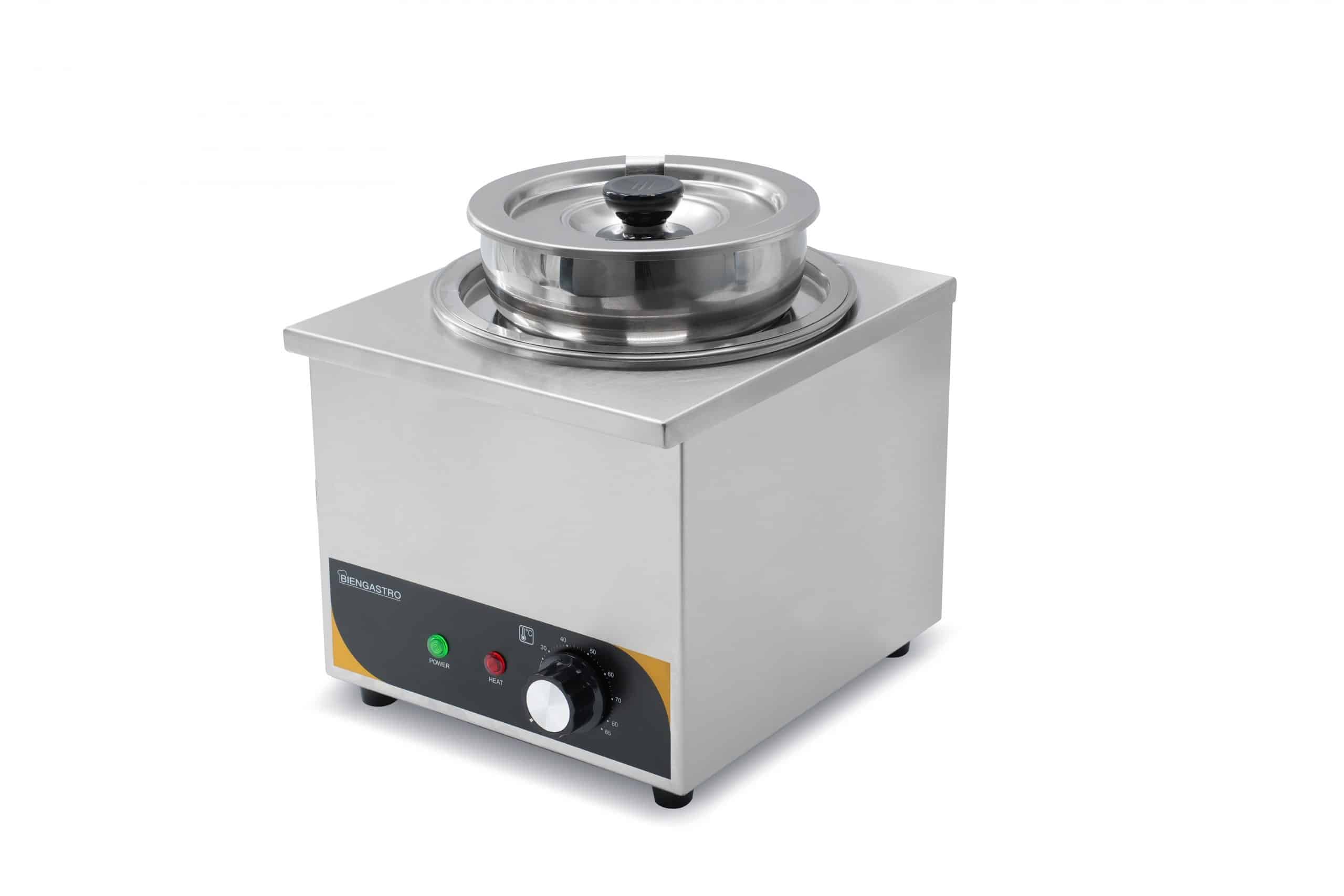
The most compact option, holding one GN (Gastronorm) food pan. Ideal for:
- Small cafés, delis, or snack bars
- Operations with limited counter space
- Focused menus with just a few hot items
Capacity: Typically 1 × GN 1/1 or 1 × GN 1/2 pan
Power: 500W – 1200W
Best for: Small to medium operations
2. Countertop Double-Pot Bain Marie
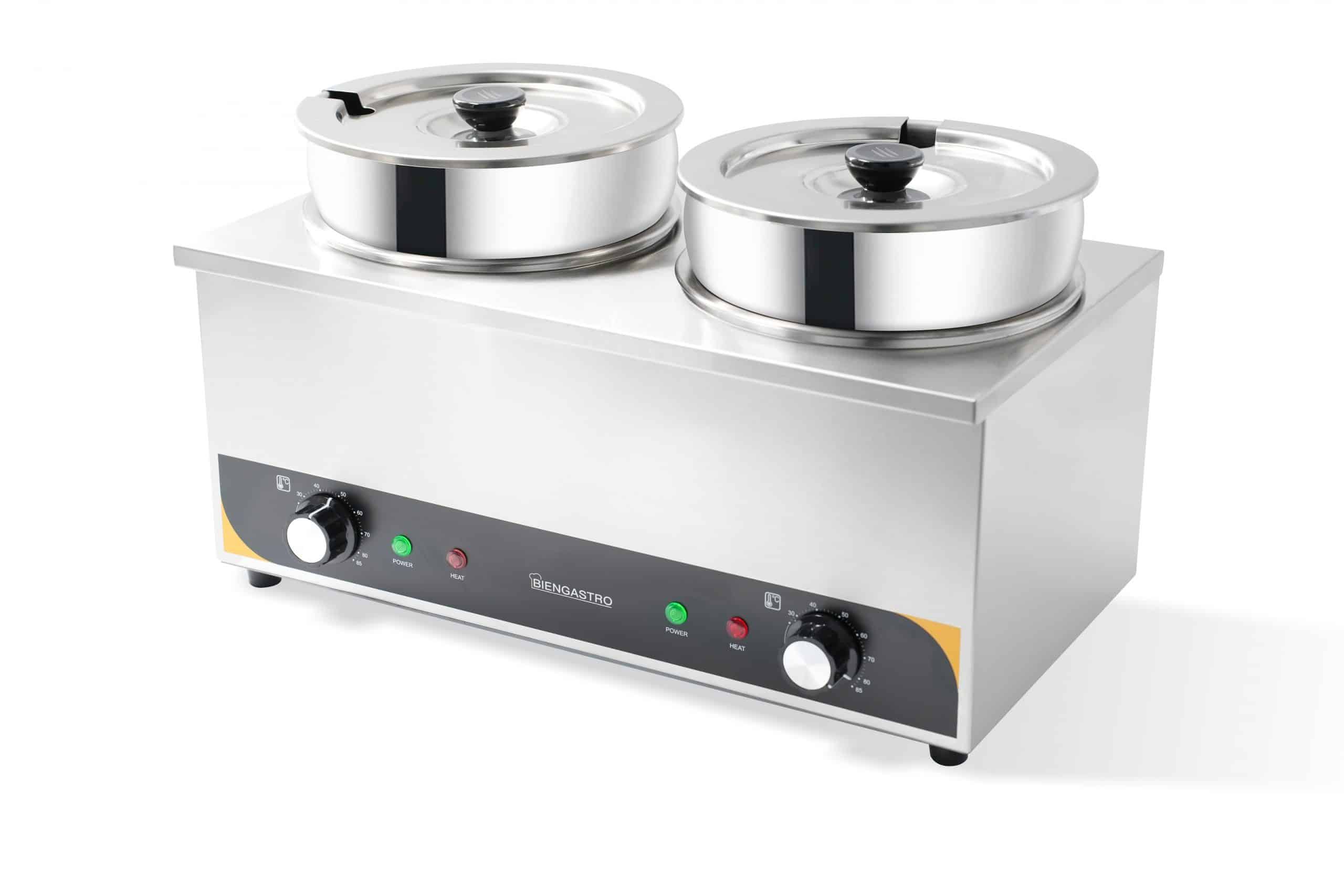
Holds two separate food pans side by side, often with independent temperature controls. Ideal for:
- Restaurants serving multiple sauces or sides
- Fast-casual or café operations
- Catering setups that need flexibility
Capacity: 2 × GN 1/2 or 2 × GN 1/3 pans
Power: 1000W – 2500W
Best for: Medium-volume operations with varied menus
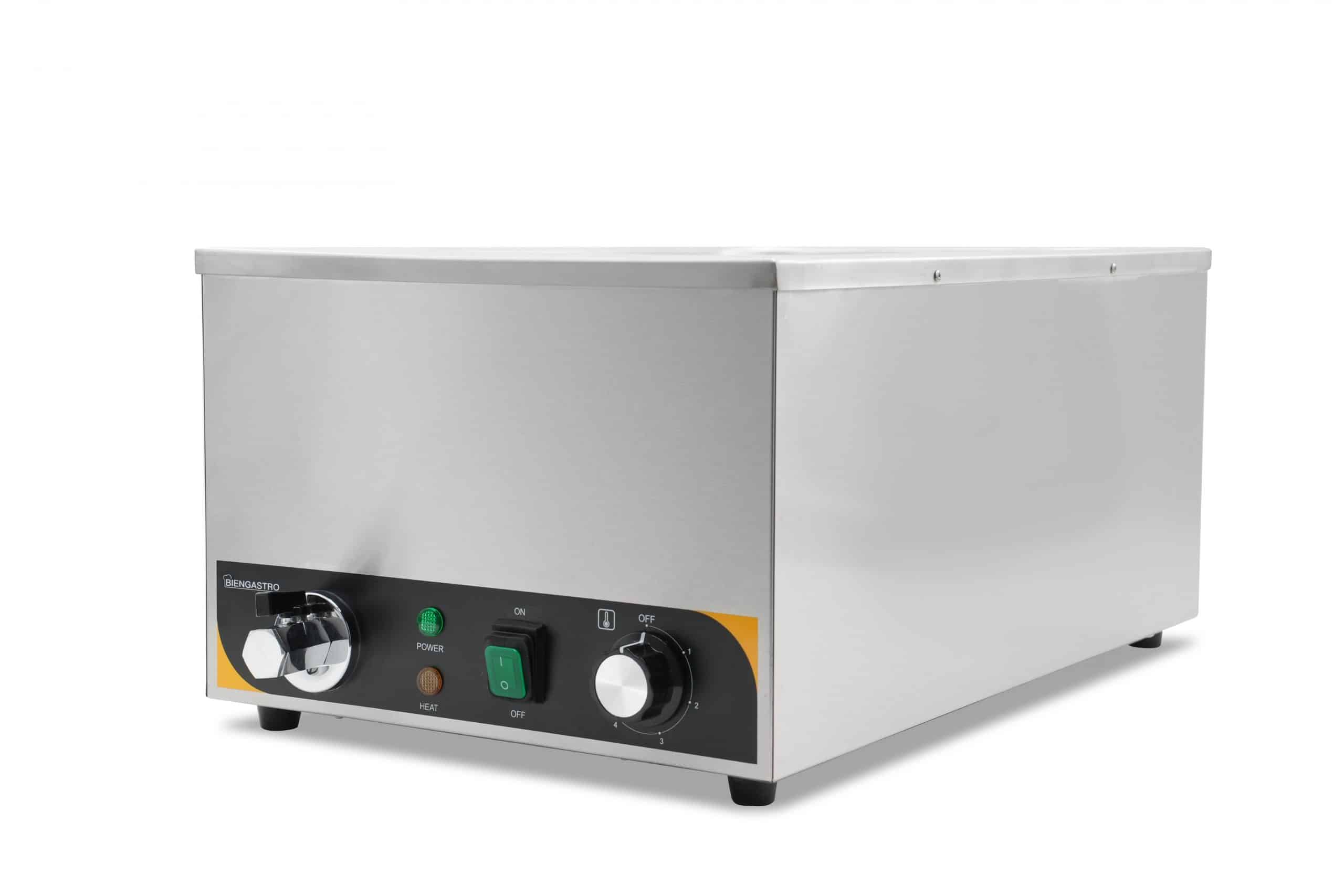
3. Countertop Single-Tank Bain Marie
A single continuous water tank that accommodates multiple GN pans across the full length. Ideal for:
- Buffet restaurants and hotel breakfast bars
- Canteens and staff dining facilities
- High-volume catering events
Capacity: 2–4 GN pans simultaneously
Power: 1500W – 3500W
Best for: High-volume buffet and catering operations
4. Drop-In / Countertop Insert Bain Marie
Designed to be installed flush into a countertop or serving station for a built-in look. Common in:
- Hotel food service counters
- Stadium and event catering
- Fixed buffet installations
—
Key Features to Look For
Not all bain maries are created equal. Here are the critical features that separate a reliable commercial unit from a disappointing one.
Temperature Control Range
Look for units with adjustable temperature control from 60°C to 85°C (140°F to 185°F). This range covers the vast majority of hot-holding needs:
| Food Type | Recommended Holding Temp |
|———–|————————–|
| Soups & Broths | 75–85°C |
| Sauces & Gravies | 70–80°C |
| Rice & Pasta Dishes | 65–75°C |
| Vegetables & Sides | 60–70°C |
| Meat & Poultry | 65–75°C |
A thermostat with precise control prevents food from boiling dry or dropping below safe serving temperature. The best units have a digital or analog dial that lets you fine-tune the setting quickly during service.
Construction Material — Stainless Steel Is Essential
In a commercial kitchen, durability and hygiene are non-negotiable. Always choose a bain marie with:
- SS304 stainless steel body and basin — corrosion-resistant, easy to clean, food-safe
- Removable water tank or drain valve — makes cleaning much faster
- Reinforced legs or feet — for stability on countertops during busy service
Avoid units with plastic components around the heating area — they degrade quickly under constant heat.
Water Level Indicator and Overheat Protection
Running a bain marie dry will damage the heating element and potentially ruin food. Look for:
- Clear water level window or MIN/MAX markings on the tank
- Automatic overheat protection or dry-heat cutoff — essential for busy services when staff may not notice the water level
Lid / Cover Options
A transparent cover or lid helps retain heat and humidity, reducing the rate at which water evaporates. This is especially important during long service periods. Some units come with hinged lids, while others are open-top — choose based on your menu and service style.
Certifications
For any commercial kitchen equipment, always verify:
- CE certification — European safety standard
- RoHS compliance — restricted hazardous substances
- LFGB certification — German food-safe materials standard
These certifications confirm the unit meets international safety and hygiene requirements.
—
How to Choose the Right Bain Marie for Your Operation
Choosing the right bain marie comes down to three key factors: volume, menu, and space.
Step 1: Estimate Your Holding Volume
How many hot items do you need to hold simultaneously? Count your menu items that require hot-holding and estimate the GN pan sizes needed:
- 1–2 items → Single-pot bain marie
- 3–4 items → Double-pot or 2-pan tank bain marie
- 5+ items → Multi-pan tank bain marie or multiple units
Step 2: Consider Your Peak Service Period
How long does your busiest service run? A bain marie that’s only used for 30-minute bursts can be a basic model, but operations running 4–6 hour continuous service need:
- High-quality heating elements that maintain steady temperature
- Reliable thermostat that doesn’t drift over time
- Easy water refill access during service
Step 3: Match the Size to Your Countertop
Measure your available countertop space carefully. Most commercial countertop bain maries follow GN (Gastronorm) sizing conventions:
| Unit Size | Approximate Footprint |
|———–|———————-|
| Single 1/2 GN | 350 × 300 mm |
| Single 1/1 GN | 560 × 350 mm |
| Double 2 × 1/2 GN | 650 × 350 mm |
| 2-pan tank | 700 × 400 mm |
Always leave space on either side for food pan removal and ventilation.
Step 4: Electric Power Requirements
Commercial bain maries run on standard 220–240V single-phase power (most countertop models) or 380V three-phase (larger floor-standing units). Confirm your kitchen’s electrical capacity before purchasing.
—
Bain Marie vs Chafing Dish: Which Should You Choose?
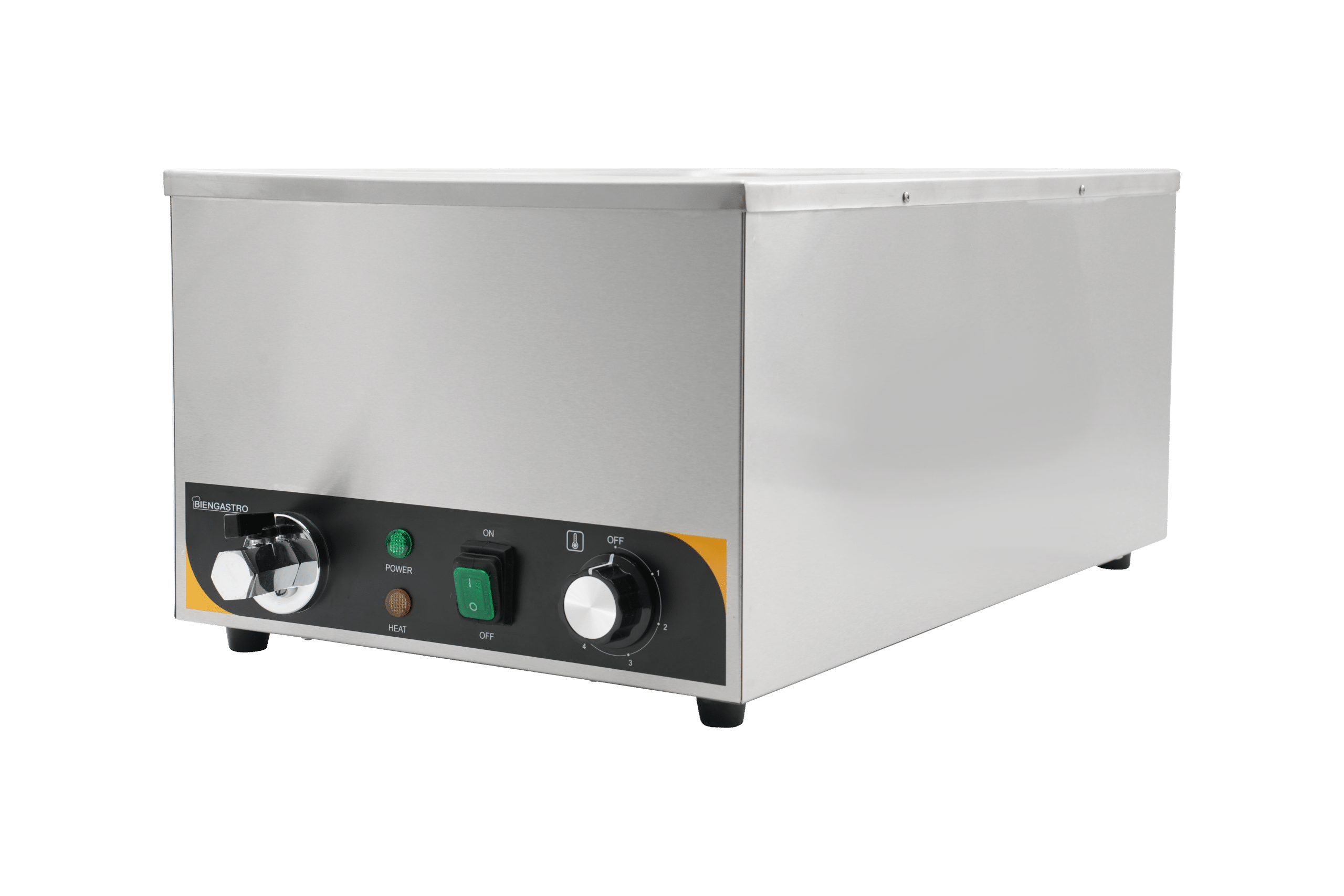
Both bain maries and chafing dishes are used for hot-holding food, but they serve different purposes:
| Feature | Electric Bain Marie | Chafing Dish |
|———|——————–|————–|
| Heat source | Electric heating element | Gel fuel canister |
| Temperature control | Precise thermostat dial | Fixed (high heat) |
| Running cost | Low (electricity) | Ongoing (gel canisters) |
| Portability | Countertop, fixed position | Fully portable |
| Food safety | More consistent temperature | Can vary |
| Best for | Fixed kitchen/buffet station | Events, outdoor catering |
| Setup | Permanent installation | Quick setup anywhere |
Choose a bain marie if you have a fixed buffet station, permanent kitchen setup, or high-volume operation where temperature consistency and running costs matter.
Choose chafing dishes if you need portability for off-site catering events, outdoor banquets, or temporary setups.
—
Installation and Setup Tips
Setting up your commercial bain marie correctly from day one extends its lifespan and improves performance:
- Level the unit — Ensure it sits flat on the countertop to prevent uneven water distribution
- Fill with clean water to the MAX line before turning on the heat
- Preheat the water for 15–20 minutes before loading food pans
- Use correct GN pan sizes — oversized pans can trap heat unevenly
- Add a small amount of white vinegar to the water in hard-water areas to reduce limescale buildup
- Position away from drafts — airflow from ventilation or open doors can cause temperature fluctuations
—
Maintenance and Cleaning Guide
Proper maintenance keeps your bain marie running efficiently and safely for years.
Daily Cleaning
- Turn off and allow to cool completely before cleaning
- Drain the water tank completely using the drain valve (or tilt if no drain)
- Remove all food pans and wash separately
- Wipe down the interior basin with a damp cloth and mild detergent
- Clean exterior surfaces with a stainless steel cleaner
Weekly Deep Clean
- Descale the water tank with a commercial descaling solution or diluted citric acid
- Inspect the heating element for limescale buildup — heavy scaling reduces efficiency
- Check the thermostat calibration — set to 75°C and verify with a food thermometer
Monthly Checks
- Inspect the power cord and plug for damage
- Check all seals and gaskets for wear
- Verify the drain valve opens and closes properly
- Confirm overheat protection activates correctly
Daily maintenance checklist:
- [ ] Drain and refill water tank with clean water
- [ ] Remove and clean all food pans
- [ ] Wipe down interior basin and exterior surfaces
- [ ] Check water level indicator is functioning
- [ ] Verify temperature is maintaining set point
—
Commercial Bain Marie from Biengastro
At Biengastro, we manufacture a range of commercial bain maries designed for the demands of professional food service. Our units are built with:
- SS304 stainless steel construction — durable, food-safe, and easy to clean
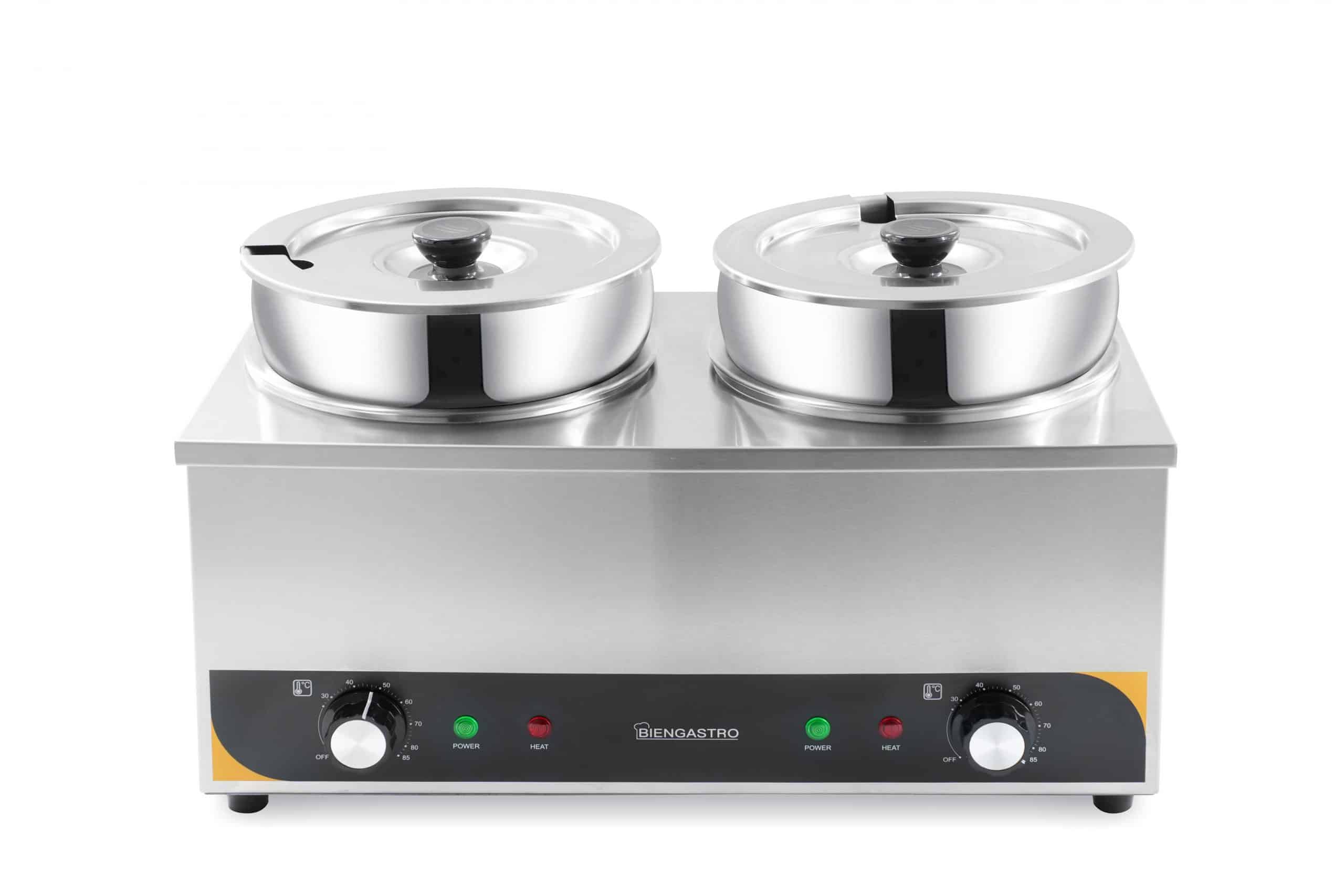
- Precise thermostat control — adjustable from 60°C to 85°C
- CE, RoHS, and LFGB certifications — meeting international safety standards
- Available in single-pot, double-pot, and tank configurations — to match any operation size
Whether you’re running a small café, hotel buffet, or large catering operation, our bain maries are engineered for reliable, consistent performance during the longest service periods.
Browse our bain marie range: Biengastro Commercial Bain Marie or contact our sales team for a personalized recommendation.
—
Conclusion
A commercial bain marie is a foundational piece of equipment for any restaurant, hotel, or catering business that serves hot food. The right unit keeps food at safe temperatures, maintains quality during long service periods, and reduces food waste.
When choosing your bain marie, focus on:
- Capacity — match to your menu and peak volume
- Build quality — SS304 stainless steel body and basin
- Temperature range — 60–85°C with reliable thermostat
- Certifications — CE, RoHS, LFGB for safety and compliance
- Ease of cleaning — drain valve, removable pans, smooth surfaces
Invest in a quality commercial bain marie and it will pay for itself many times over in food safety compliance, reduced waste, and smoother service operations.
—
Frequently Asked Questions
What temperature should a commercial bain marie be set to?
For most hot-holding applications, set your bain marie to 70–80°C (158–176°F). Food safety regulations typically require hot food to be held above 60°C (140°F) to prevent bacterial growth. For soups and sauces, 75–85°C is ideal. Always verify with a food thermometer.
How long can food be safely held in a bain marie?
According to most food safety guidelines, food should not be held in a bain marie for more than 4 hours without being replenished or replaced. Monitor food quality regularly and discard any food that has been held too long or has degraded in quality or texture.
How much does a commercial bain marie cost?
Commercial countertop bain maries range from $150 to $800+ depending on capacity, build quality, and features. Single-pot countertop units are the most affordable, while larger multi-pan tank models cost more. Consider total cost of ownership — a quality unit that lasts 5–10 years is a better investment than a cheap unit that needs replacement in 1–2 years.
What is the difference between a bain marie and a steam table?
A bain marie uses a water bath heated by an electric element, while a steam table uses steam to heat food pans from below. Both hold food at safe temperatures, but bain maries are more common in smaller operations due to their simplicity and lower cost. Steam tables are typically larger and used in high-volume institutional foodservice.
Can I use a bain marie to cook food, not just hold it?
A commercial bain marie is designed for hot-holding food that has already been cooked, not for cooking from scratch. Using it as a cooking device is not recommended — it heats too slowly and doesn’t reach the temperatures needed for proper cooking. Use it to hold pre-cooked food at serving temperature.
—
Related Articles:
- Bain Marie vs Chafing Dish: Which is Better for Your Buffet?
- Commercial Food Warmer Buying Guide
- Commercial Electric Chafing Dish Buying Guide
About Biengastro:
Biengastro is a leading manufacturer of commercial kitchen equipment supplying restaurants, hotels, bakeries, and food service businesses worldwide. All products carry CE, RoHS, and LFGB certifications.
—
Last Updated: May 2026