


Commercial Gas Griddle Buying Guide: How to Choose the Best One for Your Restaurant
A commercial gas griddle is one of the most versatile and high-output cooking appliances you can invest in for your food service operation. Whether you’re flipping hundreds of burgers during a lunch rush, searing steaks for a busy dinner service, or preparing a full breakfast spread at a hotel buffet, a quality gas griddle can dramatically boost your kitchen’s throughput and consistency.
With decades of experience manufacturing commercial kitchen equipment for restaurants, hotels, and catering operations worldwide, Biengastro understands exactly what professional kitchens need from a gas griddle. This comprehensive buying guide will walk you through every key decision factor — from BTU output and plate material to size, safety features, and total cost of ownership — so you can make a confident, informed purchase.
Why Choose a Gas Griddle Over an Electric Model?
The choice between gas and electric griddles is one of the first decisions you’ll face. Both have their merits, but commercial gas griddles offer a distinct set of advantages that make them the preferred choice in many professional kitchens:
Faster Heat-Up Times
Gas griddles typically reach cooking temperature in 8–12 minutes, significantly faster than most electric models. During a busy service, every minute counts, and faster heat-up means you’re ready sooner.
Higher BTU Output for Demanding Applications
A commercial gas griddle can deliver anywhere from 30,000 to 90,000+ BTU/hr depending on the model and number of burners. This raw heat output is ideal for high-volume cooking tasks where maintaining consistent surface temperature under load is critical — such as smash burgers, teppanyaki-style cooking, or high-volume breakfast service.
Lower Operating Costs in Gas-Rich Markets
In regions where natural gas or LPG is cheaper than electricity per unit of energy, gas griddles can significantly reduce your daily operating costs. Over the lifetime of the appliance, these savings can be substantial.
Independence from Electrical Infrastructure
For food trucks, pop-up restaurants, outdoor catering events, or kitchens with limited electrical capacity, a gas griddle offers the flexibility of being powered independently from the mains electrical system.
Related Reading: Gas vs Electric Griddle: Which is Better for Your Restaurant?
Key Factors to Consider When Buying a Commercial Gas Griddle
1. Griddle Plate Material: Steel vs Chrome
The cooking surface is the heart of any griddle, and the material you choose has a major impact on cooking performance, maintenance, and longevity.
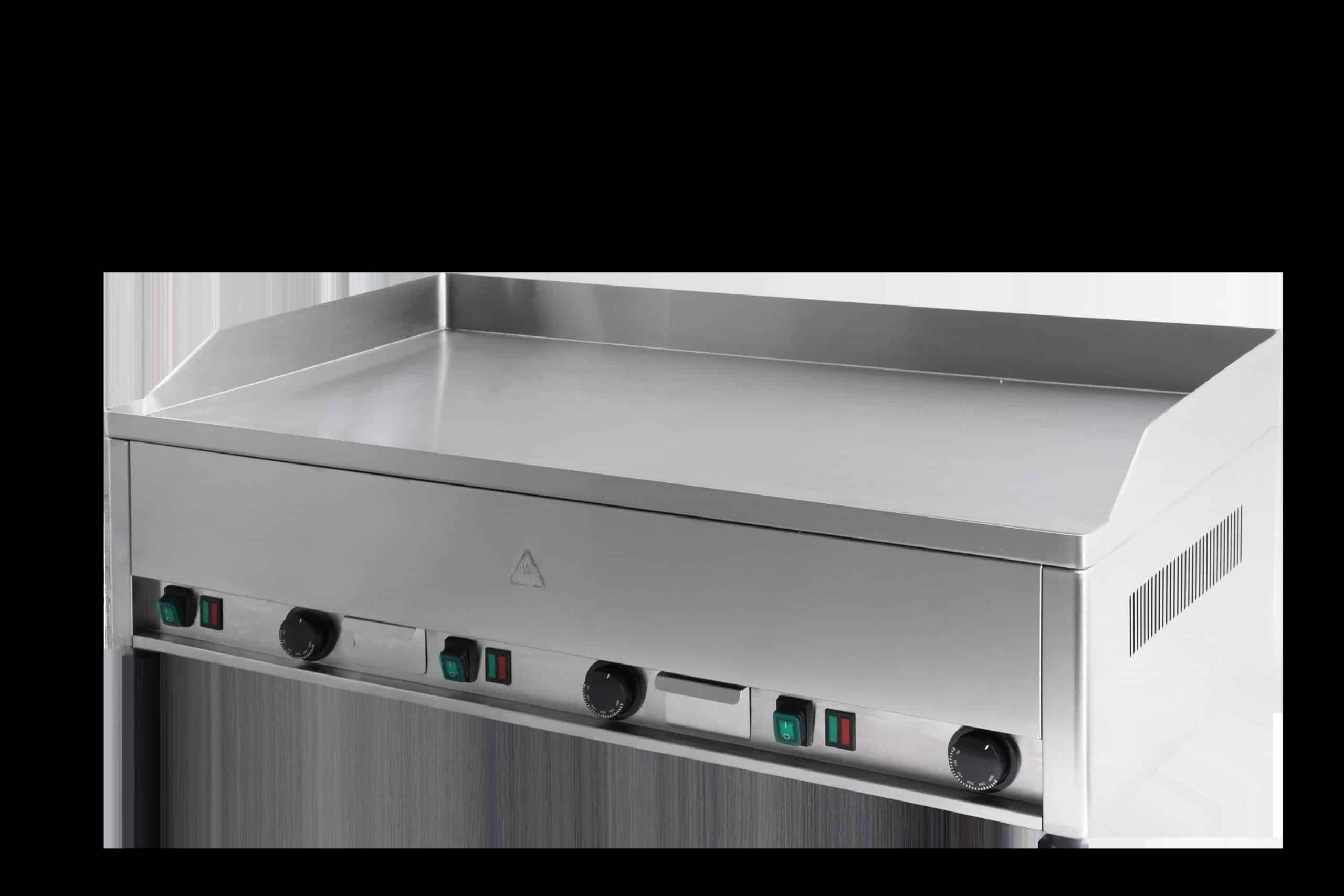
Cold-Rolled Steel Plate (Carbon Steel)
Cold-rolled steel is the industry standard for most commercial gas griddles. It offers:
- Excellent heat retention — once up to temperature, it maintains heat well even when adding cold food
- Natural non-stick properties when properly seasoned — a well-maintained steel plate develops a patina that improves with use
- Affordability — steel plates are generally less expensive to manufacture and repair
- High-heat capability — steel handles very high temperatures without warping (up to 300–350°C)
- Best for: Burgers, steaks, bacon, eggs, pancakes, stir-fry, and most high-heat applications
Maintenance note: Steel plates require regular seasoning with oil to prevent rust and maintain non-stick properties. They should never be left bare and wet after cleaning.
Polished Chrome Plate
Chrome-plated griddle surfaces offer a different set of benefits:
- Virtually non-stick out of the box — ideal for delicate proteins, fish, or egg dishes that stick easily to steel
- Easier cleaning — chrome’s smoother surface releases food residue more easily
- Better for temperature-sensitive foods — chrome distributes heat more evenly, reducing hot spots
- Hygienic and corrosion-resistant — chrome doesn’t rust or require seasoning
- Best for: Crepes, fish, eggs, delicate pastries, items where appearance matters
Maintenance note: Chrome plates cannot be used with metal scrapers; use plastic or nylon utensils and cleaners specifically formulated for chrome surfaces.
Stainless Steel (SS304)
Some premium griddles feature full SS304 stainless steel construction including the cooking plate. At Biengastro, we use SS304 food-grade stainless steel in our griddle frames and side panels as standard, ensuring compliance with CE, RoHS, and LFGB certifications. SS304 resists corrosion, is easy to sanitize, and meets strict food safety standards required in professional kitchens.
2. BTU Rating and Burner Configuration
BTU (British Thermal Units) measures heat output. For commercial applications, you need enough BTU to maintain cooking temperature even when the griddle is fully loaded with cold food.
| Griddle Size | Recommended BTU Range | Typical Burner Count |
| 300mm (12″) | 15,000–25,000 BTU/hr | 1 burner |
| 600mm (24″) | 30,000–45,000 BTU/hr | 2 burners |
| 900mm (36″) | 45,000–60,000 BTU/hr | 3 burners |
| 1200mm (48″) | 60,000–90,000 BTU/hr | 4 burners |
Key considerations:
- Multiple independent burners allow you to run different temperature zones simultaneously — ideal for cooking proteins at high heat while warming sides at medium heat
- Thermostatic control (as opposed to manual valve control only) provides more precise temperature regulation from 50°C to 300°C
- Pilot light vs. electronic ignition — electronic ignition is more reliable and safer in commercial environments
3. Griddle Size and Footprint
Choosing the right griddle size depends on your volume and the physical space available in your kitchen.
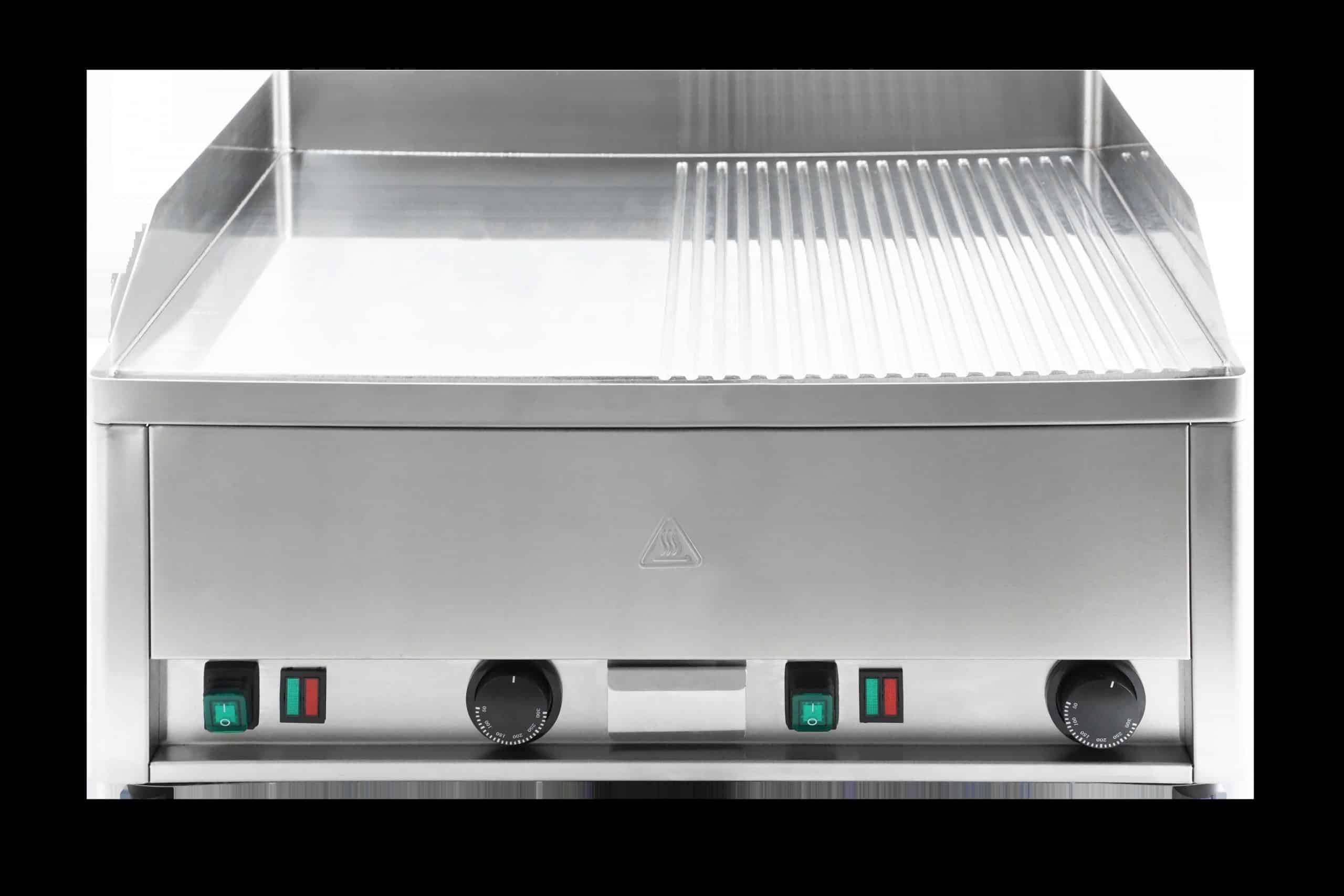
Countertop models (typically 300–600mm wide) are ideal for:
- Smaller operations (cafes, food stalls, small restaurants)
- Kitchens with limited counter space
- Supplementary cooking stations
- Food trucks and mobile catering units
Floor-standing or bench-top heavy-duty models (600–1200mm+) are better for:
- High-volume restaurants and hotel kitchens
- All-day breakfast concepts
- Teppanyaki and hibachi-style cooking
- Ghost kitchens focusing on burger or grill menus
Practical tip: Measure your available counter or floor space carefully, then add at least 15cm clearance on all sides for ventilation and heat dissipation. Consult your local fire code for minimum distances from combustible materials.
4. Gas Type: Natural Gas vs LPG
Most commercial gas griddles are available in both natural gas (NG) and LPG (liquefied petroleum gas / propane) versions. The two are not interchangeable — different gas types use different injectors and pressure settings.
Before purchasing, confirm:
- What gas supply does your premises have? (Check with your building manager or gas supplier)
- Is conversion between NG and LPG possible? (Some models allow field conversion with a conversion kit)
- What is the gas inlet pressure specification? (Ensure it matches your premises supply)
- Does the model require a dedicated gas line or can it connect to standard commercial gas outlets?
At Biengastro, our gas griddle range supports both natural gas and LPG configurations, with clearly specified inlet pressures and certified gas components to ensure compliance with local safety codes.
5. Safety Features
In a commercial kitchen, safety is non-negotiable. Look for these essential safety features in any gas griddle you consider:
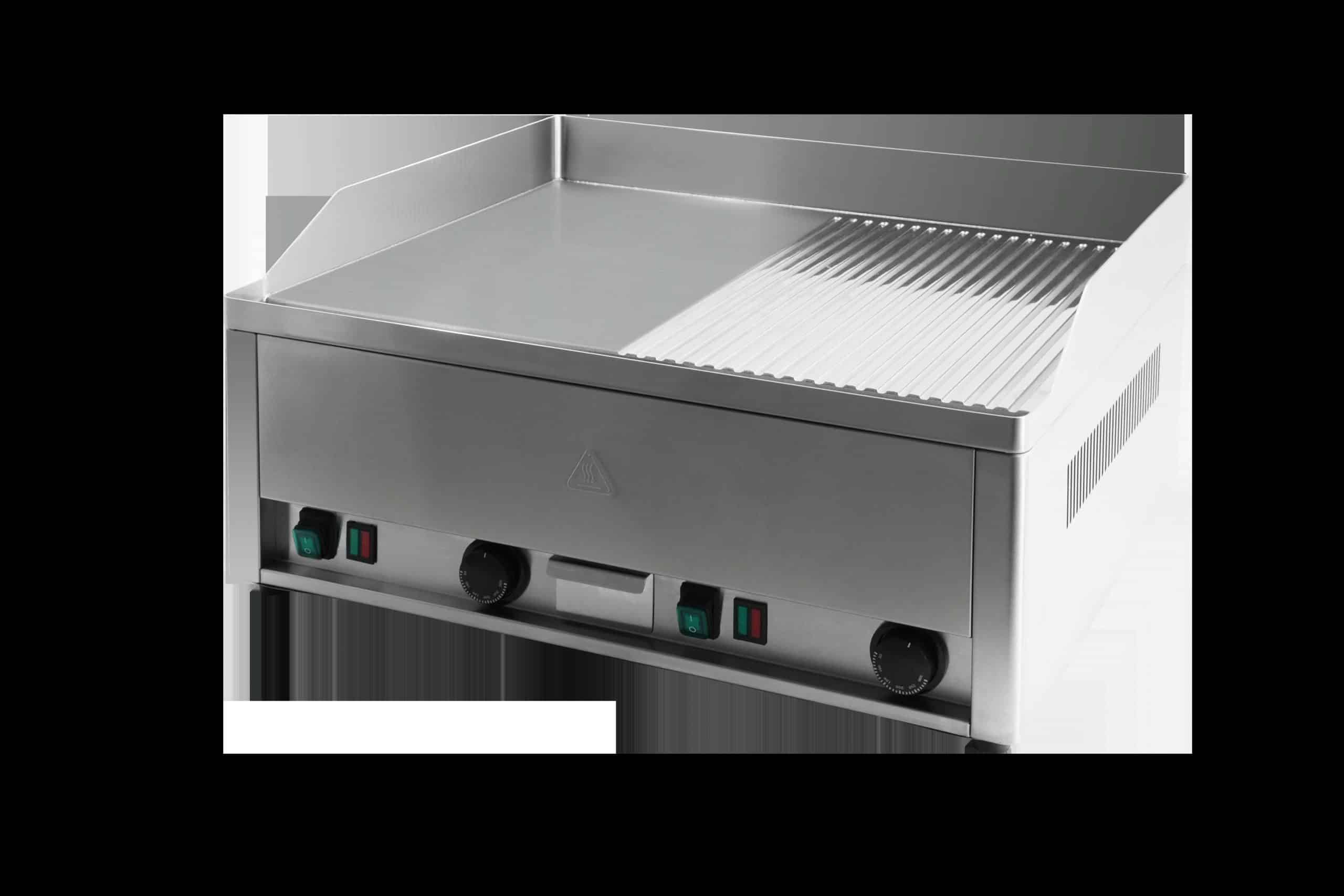
- Flame failure device (FFD) / thermocouple safety valve: Automatically cuts gas supply if the flame is extinguished unexpectedly, preventing dangerous gas leaks
- Overheat protection: Thermal cut-off prevents the griddle from reaching dangerously high temperatures
- CE certification: Confirms the appliance meets European safety, health, and environmental standards (also widely accepted in Asia, Middle East, and global export markets)
- Stainless steel splash guard/backguard: Prevents grease and food debris from falling into burner area
- Drip tray: Collects grease safely to prevent fire hazards and ease cleaning
- Non-slip feet or mounting brackets: Prevents accidental movement during use
All Biengastro commercial gas griddles are CE/RoHS certified and include flame failure protection as standard. Our factory is ISO-certified and our products undergo rigorous QC testing before shipment.
6. Ease of Cleaning and Maintenance
Grease management is a critical consideration for commercial griddles. Poor grease management leads to fire hazards, health code violations, and premature equipment failure.
Features that simplify cleaning:
- Large, removable grease drawer/drip tray: Should be accessible without tools and large enough to hold meaningful amounts of grease between services
- Smooth underside transitions: Avoid ledges and hard-to-reach corners where grease accumulates
- Stainless steel body panels: Easy to wipe down and sanitize
- Removable side drip channels: Allow full access for cleaning
Cleaning best practices:
- Scrape the cooking surface while still warm (not hot) using a griddle scraper
- Apply griddle cleaner and scrub with appropriate pad (steel scrubber for steel plate; nylon for chrome)
- Rinse with water and dry completely
- Re-season steel plates with a thin coat of cooking oil
- Empty and clean the grease drawer after every service
Biengastro Commercial Gas Griddle Range
At Biengastro, we manufacture a comprehensive range of commercial gas griddles designed for the demands of professional food service operations. Our gas griddle lineup features:
- Cooking plate options: Cold-rolled steel, polished chrome, or SS304
- Power configurations: Single, double, and triple burner models to suit different volume requirements
- Temperature control: Precise thermostat control from 50°C to 300°C
- Construction: Full SS304 stainless steel body, CE/RoHS/LFGB certified
- Gas compatibility: Available in both natural gas and LPG versions
- Certifications: CE, RoHS, LFGB food safety certification
- Custom sizing: Available for OEM/ODM orders
Our griddles are exported to over 60 countries and trusted by hotel chains, restaurant groups, and food service operators globally. Whether you need a compact countertop unit for a food truck or a heavy-duty floor-standing model for a hotel buffet kitchen, we have a solution that fits your needs.
👉 Browse Biengastro Cooking Equipment
Commercial Gas Griddle vs Electric Griddle: Quick Comparison
| Feature | Gas Griddle | Electric Griddle |
| Heat-up time | Fast (8–12 min) | Slower (15–20 min) |
| BTU/Heat output | Very high | Moderate to high |
| Temperature precision | Good (thermostat) | Excellent (digital) |
| Operating cost | Lower in gas-rich areas | Lower where electricity is cheap |
| Installation | Requires gas line | Plug-and-play (3-phase for large) |
| Portability | Good with LPG | Limited by power cable |
| Best for | High-volume, speed-critical | Precision cooking, areas with no gas |
How to Size Your Commercial Gas Griddle
Use this simple formula to estimate the griddle cooking area you need:
- Estimate your peak hour covers (e.g., 100 covers/hour)
- Identify your primary griddle items (e.g., burgers: ~15cm × 10cm each)
- Calculate simultaneous cooking capacity needed (e.g., if each burger takes 4 min, you need to cook ~7/min = 42 at once)
- Convert to griddle area (42 × 150cm² = 6,300cm² ≈ 600mm × 900mm griddle)
Rule of thumb: A 600mm (24″) single-burner countertop griddle handles 50–80 covers/hour for burgers; a 900mm (36″) 3-burner model handles 100–150 covers/hour.
Frequently Asked Questions About Commercial Gas Griddles
How much BTU does a commercial gas griddle need?
For most restaurant applications, a commercial gas griddle needs at least 30,000 BTU/hr per burner for adequate performance under load. High-volume operations (hotel kitchens, fast-casual chains) should look for 45,000–60,000 BTU/hr per burner to maintain consistent cooking temperatures when the surface is fully loaded.
What is the best plate material for a commercial gas griddle?
Cold-rolled steel is the best all-around choice for most commercial kitchens — it handles high heat, develops a natural non-stick seasoning over time, and is durable. Chrome plates are better for delicate foods like fish, eggs, and crepes where non-stick performance out of the box is more important than raw heat tolerance.
How do I prevent rust on a gas griddle steel plate?
Keep the steel plate well-seasoned at all times. After every cleaning, apply a thin coat of high-smoke-point cooking oil (e.g., canola or flaxseed oil) and heat briefly to polymerize the oil into the surface. Never leave a steel plate bare and wet overnight. Store the griddle in a dry location.
Can I use a commercial gas griddle indoors?
Yes, but proper commercial ventilation (exhaust hood) is mandatory for indoor use of any gas cooking appliance. The exhaust hood must be sized to capture all combustion gases and grease-laden vapors. Consult your local fire safety code and kitchen design professional for specific requirements.
How long does a commercial gas griddle last?
A quality commercial gas griddle with proper maintenance should last 10–15 years or more. The main wear items are the cooking plate (can be resurfaced or replaced), burner orifices (can be cleaned or replaced), and thermostat (replaceable component). Choose a manufacturer who stocks spare parts and offers after-sales support.
Conclusion: Choosing the Right Commercial Gas Griddle
The right commercial gas griddle can become the workhorse of your kitchen — delivering consistent, high-quality results service after service, year after year. Key takeaways from this guide:
✅ Match BTU output to your volume — don’t underpower your griddle
✅ Choose plate material based on your menu — steel for most, chrome for delicate items
✅ Size for peak demand, not average — you need capacity headroom
✅ Confirm gas type before ordering — NG and LPG are not interchangeable
✅ Prioritize safety features — FFD/thermocouple is non-negotiable
✅ Plan for cleaning from day one — grease management protects your investment
Ready to explore commercial gas griddles for your restaurant or hotel kitchen? Browse our full cooking equipment range or contact our sales team for a customized recommendation.